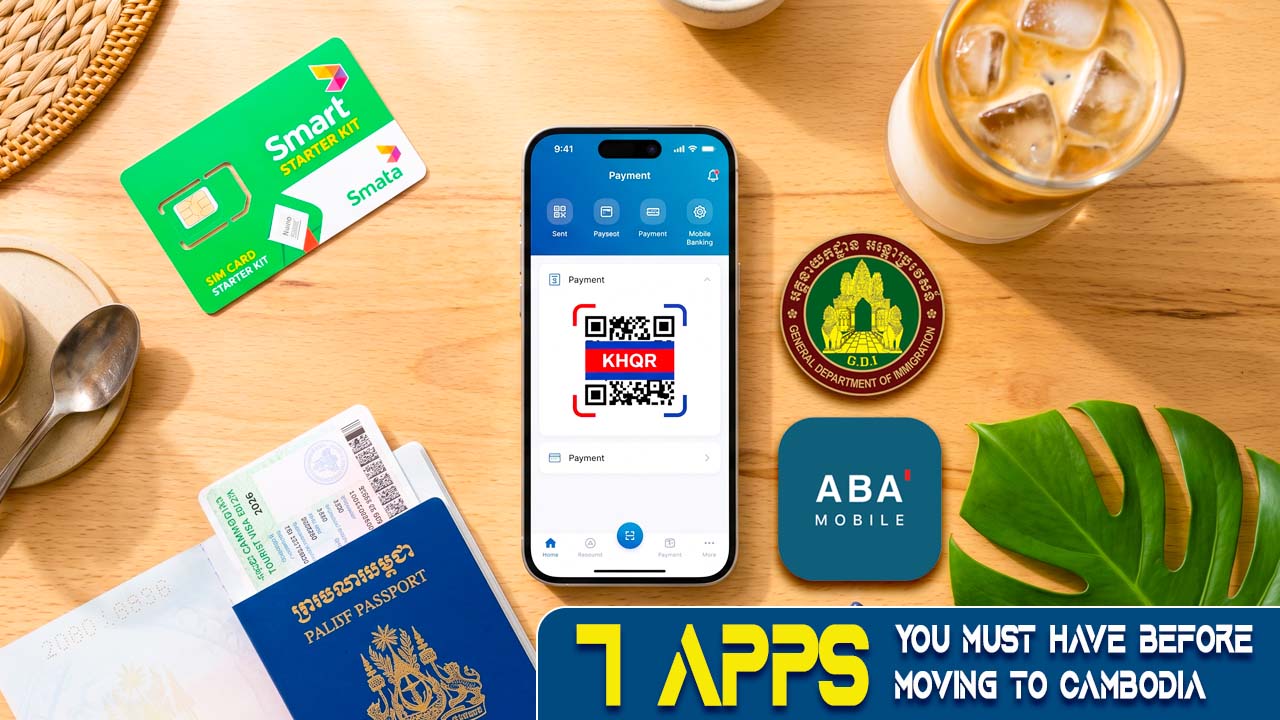


For expats, digital nomads, and retirees, opening a local bank account is one of the most critical steps to settling into Cambodia. The Kingdom has transformed into one of the world’s most advanced digital, cashless economies. Whether you are buying a 50-cent iced coffee at a street stall or paying your monthly rent, nearly every transaction in Cambodia is processed digitally via a KHQR code powered by the National Bank of Cambodia’s Bakong system.
While you can survive using foreign credit cards or physical cash, you will lose a fortune in ATM withdrawal fees and conversion rates. Fortunately, opening a Cambodian bank account as a foreigner is relatively straightforward if you have the right documents.
The Essential Document Checklist
Cambodian banks have tightened their regulations to comply with international anti-money laundering laws. You can no longer open a full bank account on a standard 30-day tourist visa.
To open a standard checking or savings account, you will need to bring the following to a branch:
- A Valid Passport: Must have at least 6 months of validity remaining.
- A Long-Term Visa: You generally need an ordinary E-class visa extension (such as an EB business visa, ER retirement visa, or EG look-for-work visa) valid for 6 or 12 months. Some banks will accept a 3-month visa if you have a solid employment contract.
- Proof of Residence: A copy of your registered house/apartment rental lease agreement (typically requiring a minimum 6-month term) or a residency certificate issued by the local Sangkat (neighborhood authority).
- Proof of Employment or Income: An official employment contract, a valid Cambodian work permit, or a business registration certificate if you are self-employed. If you are on an ER retirement visa, proof of a foreign pension or stable funds is required.
- A Local Phone Number: You will need an active Cambodian SIM card (from providers like Smart or Cellcard) linked to your smartphone to register for mobile banking apps.
Choosing the Right Bank for Expats
While Cambodia has dozens of commercial banks, three major institutions stand out as the most popular and practical options for foreigners:
1. ABA Bank (Advanced Bank of Asia)
ABA is the undisputed king of digital banking in Cambodia. Their mobile app is world-class, making it the top choice for expats.

- Pros: Highly reliable mobile app, massive network of advanced ATMs and self-service kiosks, seamless KHQR payments, and excellent English-speaking customer support.
- Cons: Strict document verification process for foreigners; they enforce the 6-month visa and rental contract rule tightly.
2. ACLEDA Bank
As the largest local bank by branch network, ACLEDA is everywhere—even in the most remote provinces of Cambodia.
- Pros: Unmatched physical presence throughout the country; they have deep integration with the national Bakong system.
- Cons: The mobile app interface can feel less modern and intuitive compared to ABA.
3. Canadia Bank or Sathapana Bank
These are excellent secondary options, often featuring shorter lines at physical branches and competitive interest rates on fixed-term deposits.
Step-by-Step Account Opening Process
Once you have gathered your documents, the physical process is quick and can usually be completed in under an hour.
1.Choose Your Account Currency:USD vs. KHR.
Cambodia operates a dual-currency system using both the US Dollar (USD) and the Khmer Riel (KHR). Most banks allow you to open a multi-currency account. It is highly recommended to open both a USD and a KHR account under the same profile so you can swap currencies instantly inside your app.
2.Visit a Major Branch in Person:Morning visits are best.
Take your physical passport, visa, lease, and employment documents to a branch. For a smoother experience, choose a flagship branch in expat-heavy areas like BKK1 or Toul Tompoung in Phnom Penh, as the staff there handle expat accounts daily and speak fluent English.
3.Complete the Forms and Submit Initial Deposit:15-30 minutes.
The relationship manager will scan your passport and verify your documents. While some savings accounts have no initial deposit requirements, standard current accounts usually require a minimum initial deposit of $100 USD.
4.Activate the Mobile App On-Site:Before leaving the desk.
Download the bank’s mobile application while sitting with the agent. They will help you link your local phone number, complete the facial recognition selfie scan, and set up your secure PIN. Do not leave the branch until your app is fully active and you can see your balance.
What About Debit Cards?
During your setup, you can request a physical debit card (Visa, Mastercard, or UnionPay). Most banks do not print these instantly at the desk; it typically takes 3 to 5 business days for the card to be issued.
The bank will send you an SMS when it is ready for pickup. However, because phone-to-phone QR scanning is so dominant in Cambodia, many expats find they rarely need to carry a physical plastic card once their mobile app is working.
Important Expat Tax Rules to Keep in Mind
Something many newcomers overlook is the Cambodian withholding tax on bank account interest. The tax rate applied to your account depends entirely on your legal residency status:
Tax Residents (6% Withholding): If you reside in Cambodia for 183 days or more in a calendar year, you qualify as a tax resident. Your earned interest on standard savings accounts will be taxed at 6%.
Non-Residents (14% Withholding): If you are on a shorter visa or have been in the country for less than 182 days, the bank will classify you as a non-resident and automatically withhold 14% tax on any interest your account generates.
If you are an American citizen, note that Cambodian banks strictly comply with FATCA (Foreign Account Tax Compliance Act) regulations. You will be required to fill out a W-9 form during your account setup, and your account details will be reported back to the US IRS.
Final Takeaway
Don’t let the paperwork intimidate you. If you have a clean 6-month visa, a formal lease agreement, and a letter proving your employment or steady income, walking into an ABA or ACLEDA branch is a breeze. Setting up your local account unlocks total financial freedom in Cambodia, allowing you to pay for everything from a simple tuk-tuk ride to your grocery bill with a quick scan of your smartphone.