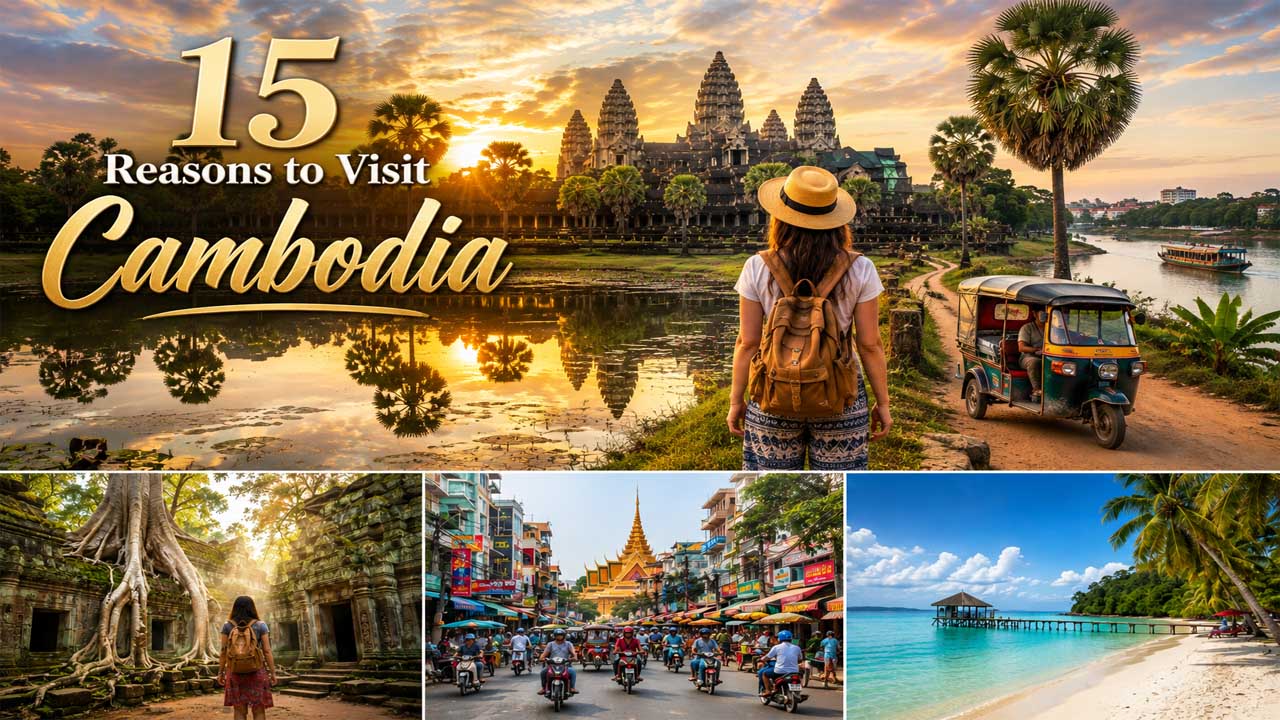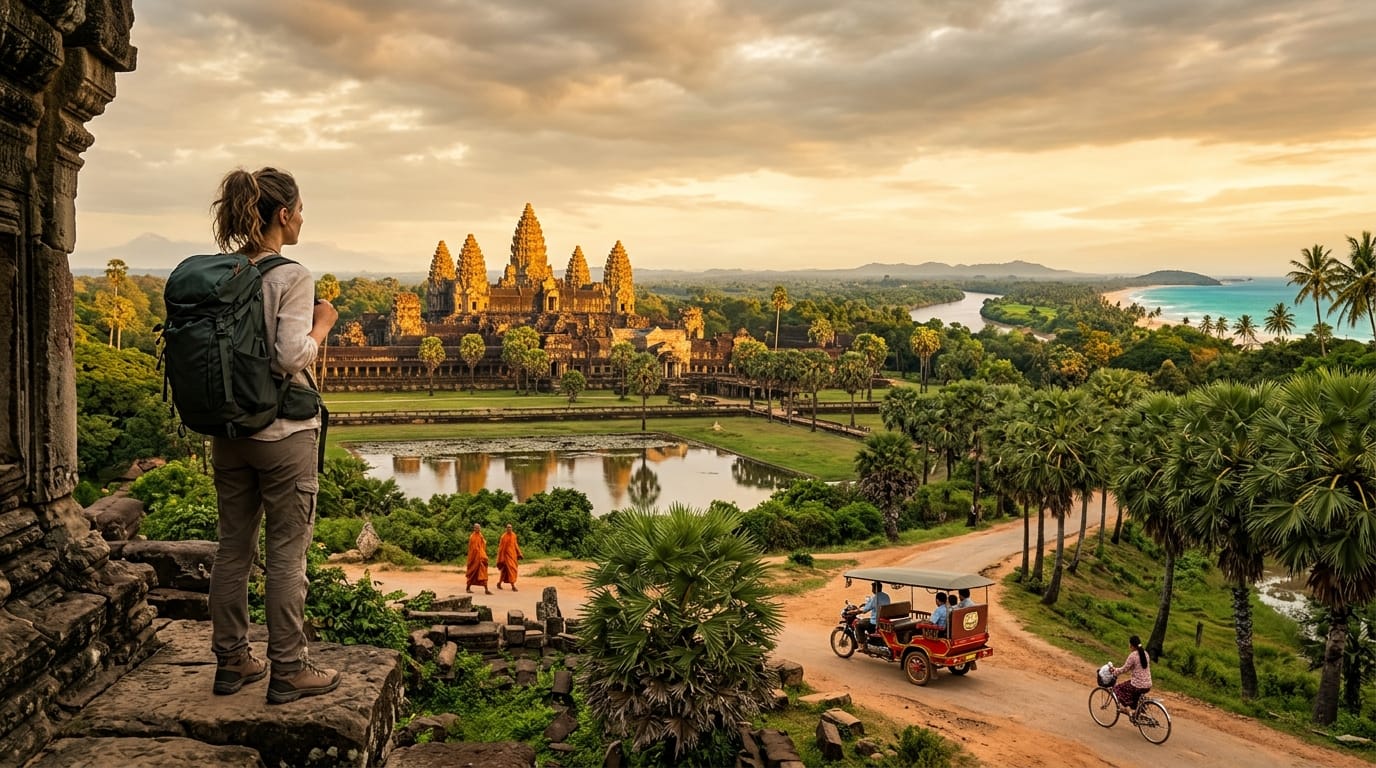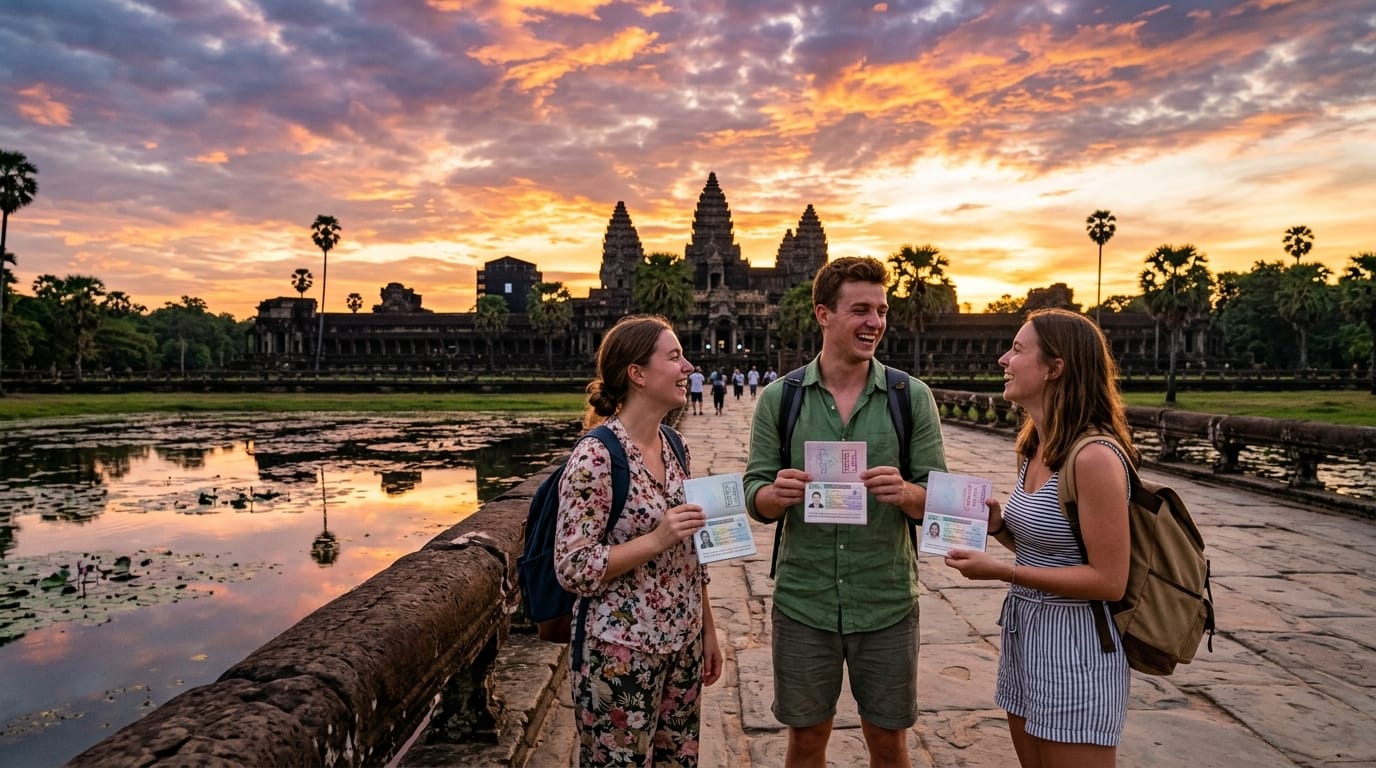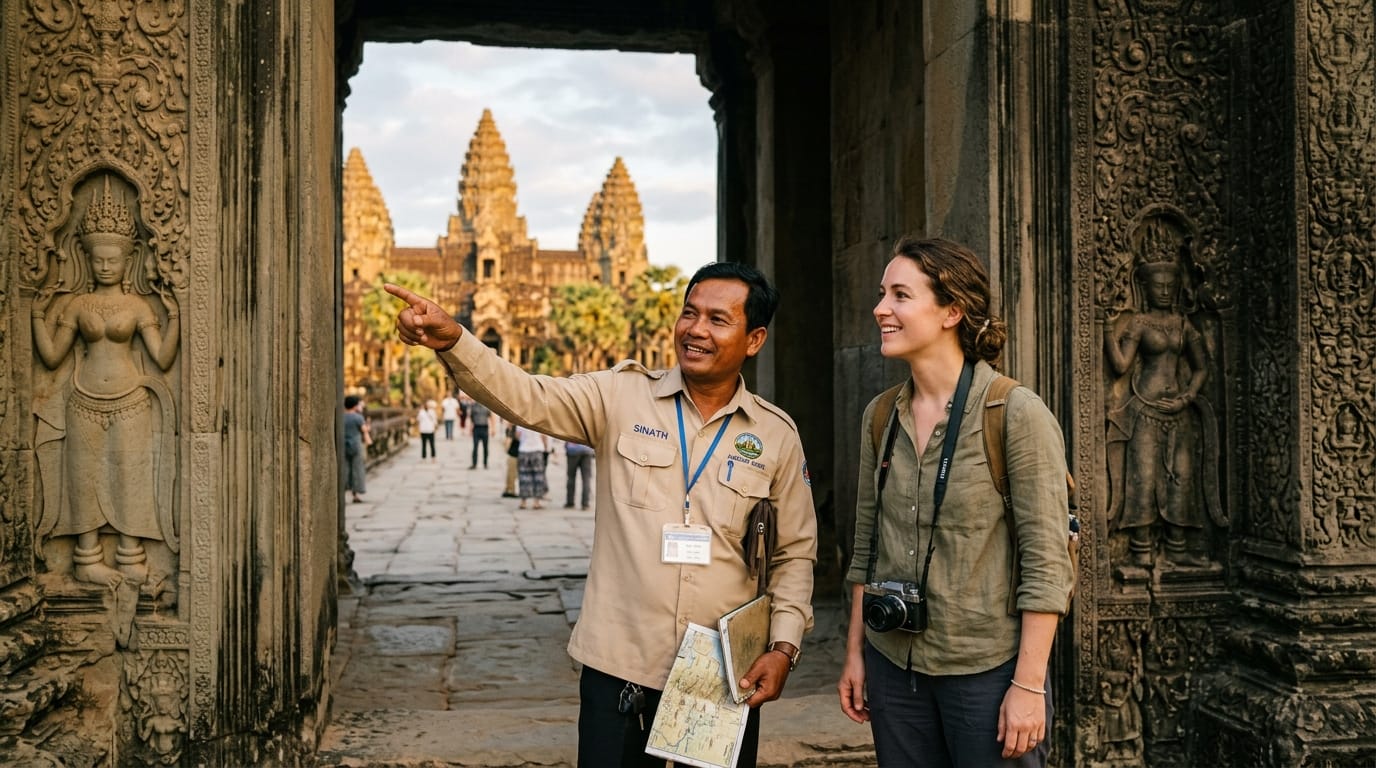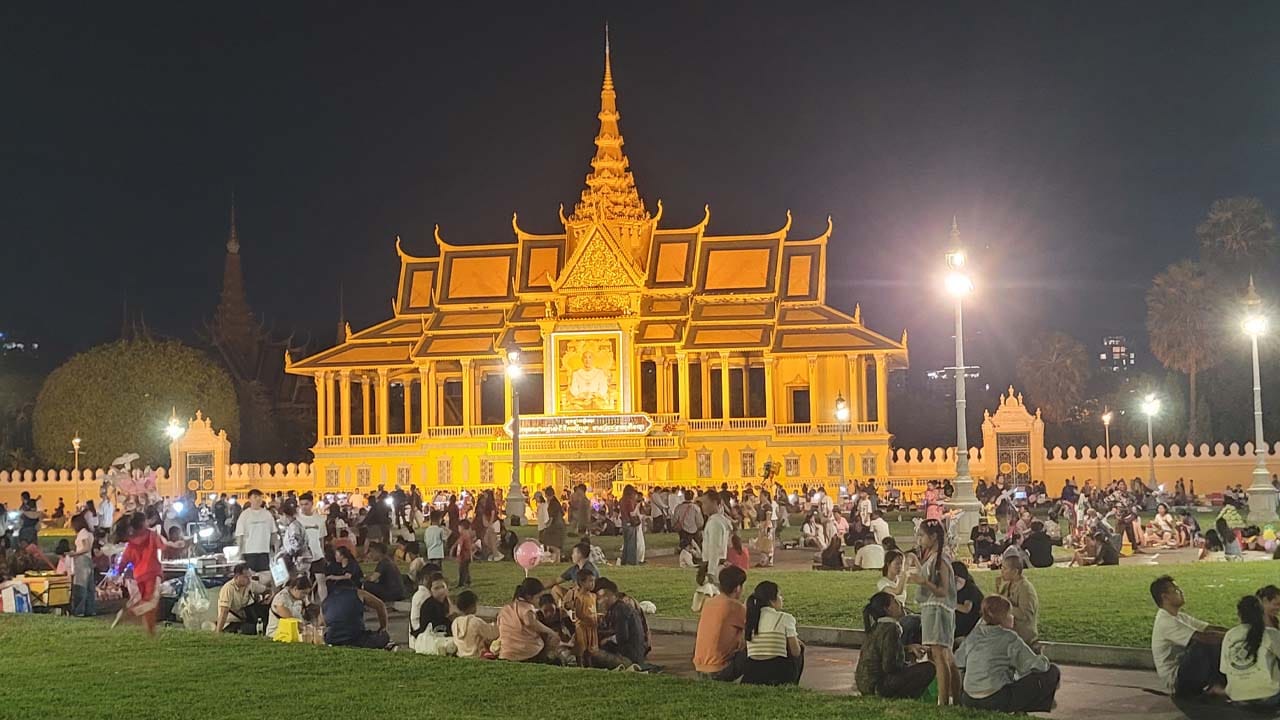

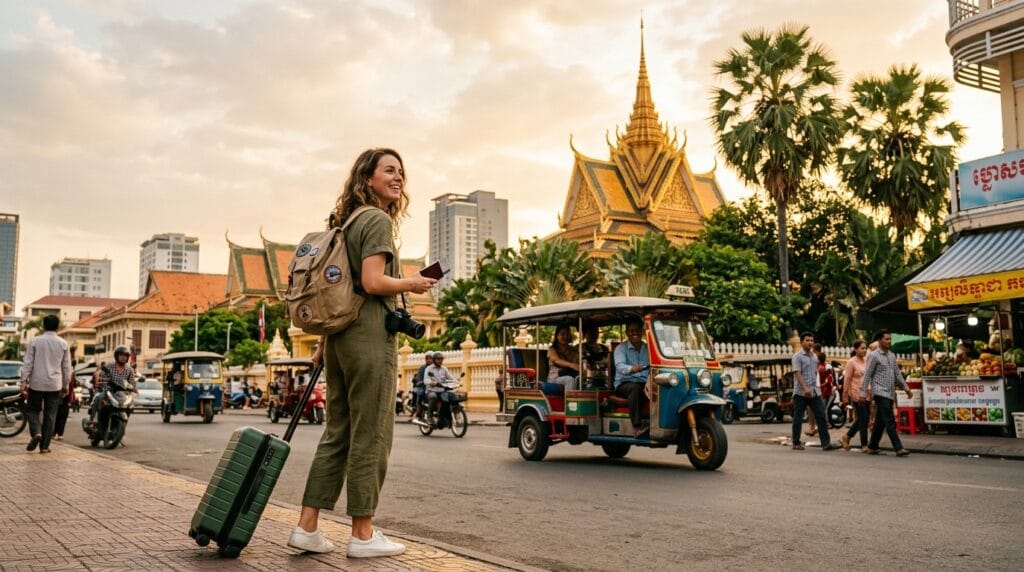
Arriving in Cambodia for the first time can be exciting, but the first few days can also feel a little confusing. From immigration and accommodation to money, transportation, mobile internet, and local customs, there are several practical things foreigners should take care of after arriving.
Whether you are visiting Cambodia for a holiday, starting a new job, studying, working remotely, or planning to stay for several months, getting the basics organized early will make your experience much easier.
This guide explains what foreigners should do after arriving in Cambodia, particularly if you are staying in Phnom Penh, Siem Reap, Sihanoukville, or another major city.
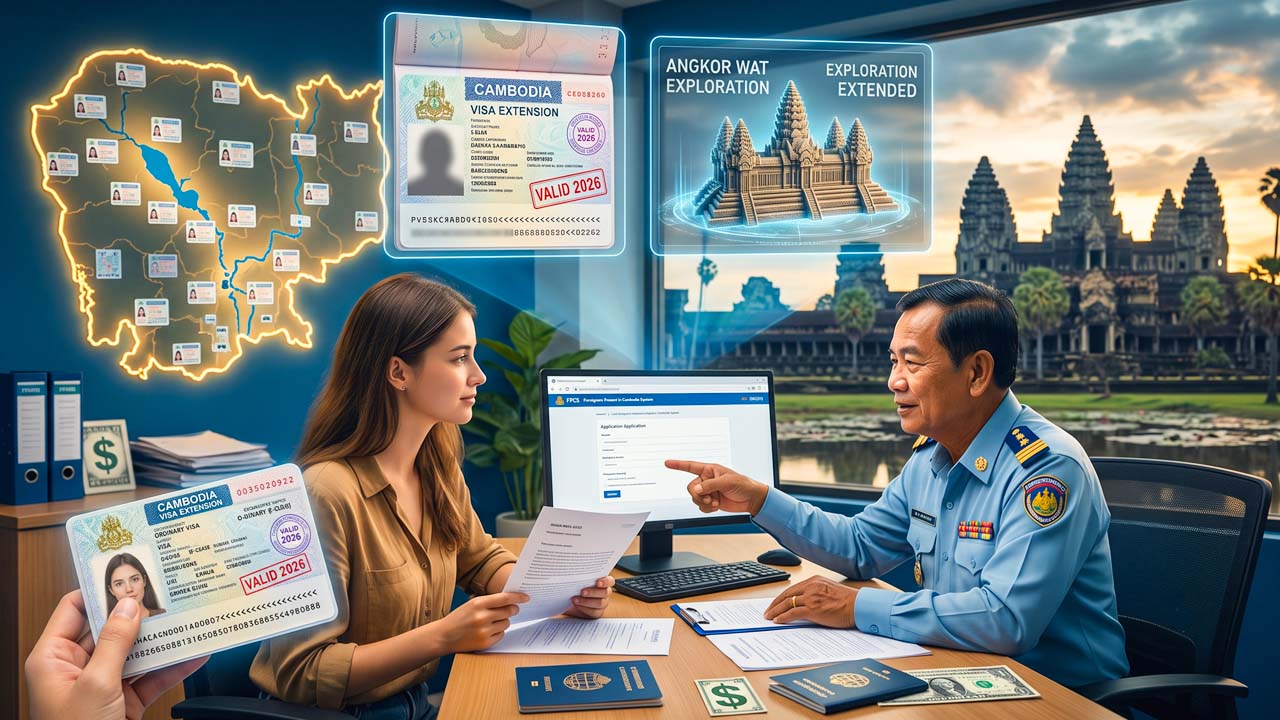
1. Complete Immigration and Keep Your Documents Safe
The first priority after arriving in Cambodia is to make sure your immigration entry is properly completed.
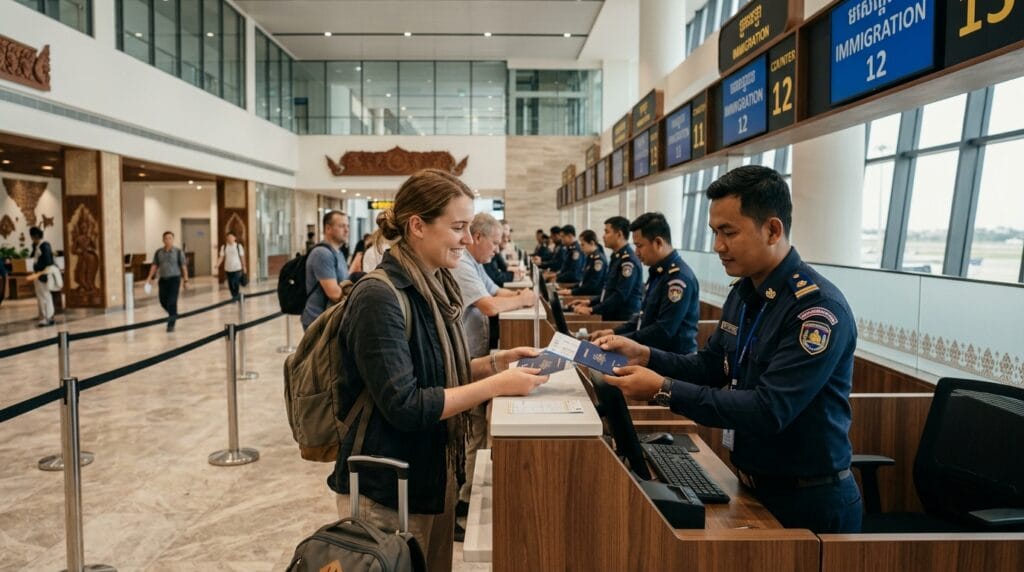
Depending on your nationality, purpose of travel, and visa situation, you may need to obtain or present the appropriate visa or entry documentation. Before leaving the airport or border checkpoint, check your passport carefully and make sure your entry information is correct.
Keep your passport, visa information, flight documents, and other important paperwork somewhere secure.
It is also a good idea to make digital copies of important documents. Save copies of your:
- Passport
- Visa or immigration documents
- Travel insurance
- Flight tickets
- Accommodation information
- Emergency contacts
Having digital copies can be extremely useful if your original documents are lost or damaged.
2. Arrange Your Accommodation
If you have not already booked long-term accommodation, consider staying in a hotel or serviced apartment for your first few days or weeks.
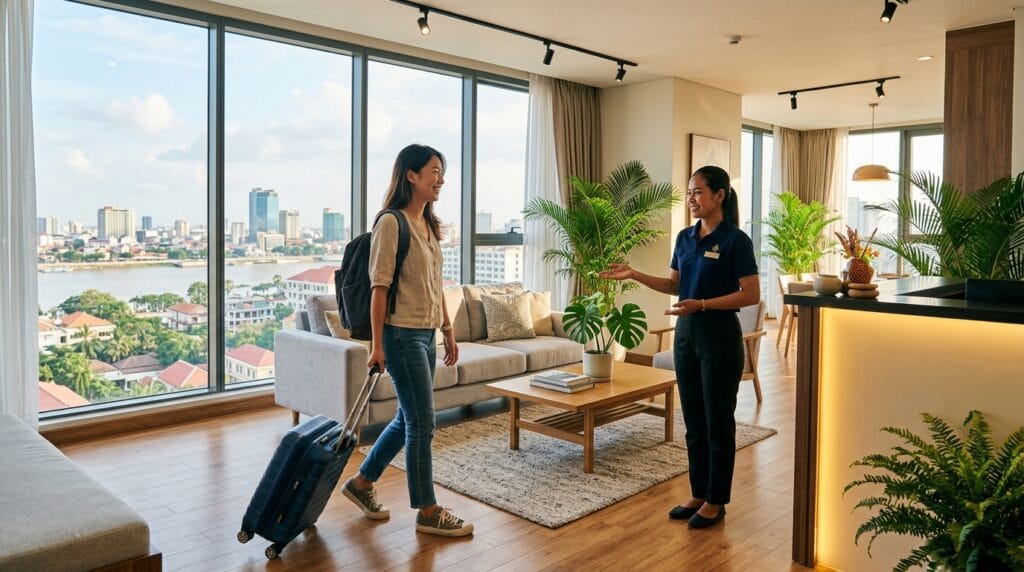
This gives you time to understand the neighborhood before signing a long-term rental agreement.
In Phnom Penh, popular residential areas for foreigners include BKK1, Toul Tom Poung, Boeung Trabaek, Tonle Bassac, Daun Penh, and Toul Kork. Each neighborhood has a different atmosphere and price range.
Before renting an apartment, check more than just the monthly rent. Ask about:
- Electricity rates
- Water charges
- Internet
- Cleaning services
- Parking
- Security
- Deposit requirements
- Contract length
- Maintenance
- Garbage collection
- Use of building facilities
A low monthly rent does not necessarily mean the apartment is the best value if utilities and additional fees are expensive.
3. Get a Cambodian SIM Card
Getting a local SIM card should be one of the first things you do after arriving.
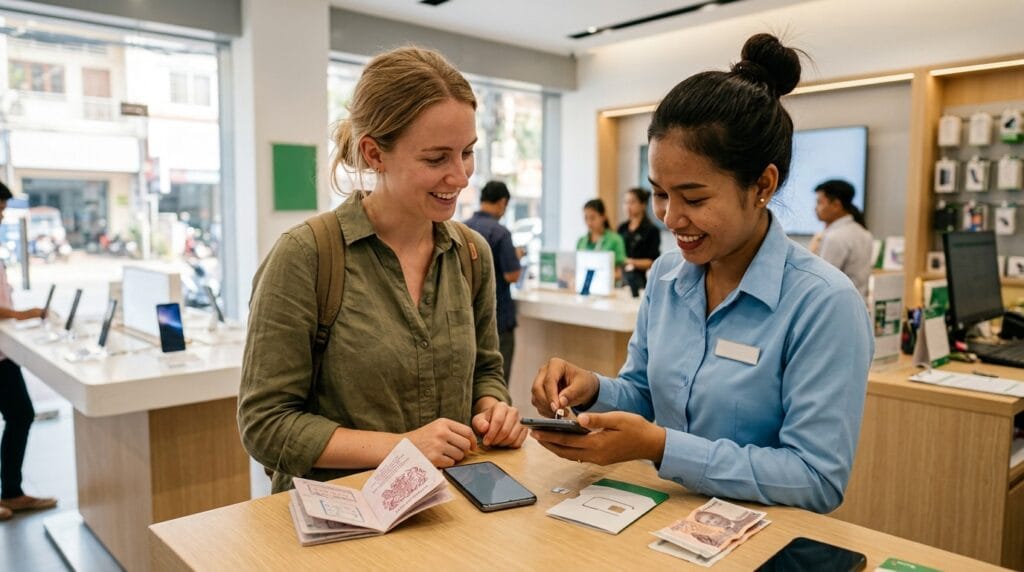
Mobile internet is extremely useful in Cambodia. You will likely need it for maps, transportation apps, messaging, online payments, restaurant searches, and communicating with landlords or local businesses.
Cambodia has several major telecommunications providers, and SIM cards and mobile data packages are generally easy to obtain.
You will normally need your passport to register a SIM card.
If your phone supports eSIM, you can also consider an eSIM option before or after arriving.
For longer stays, choose a plan based on how much data you actually use rather than automatically buying the most expensive package.
4. Get Familiar With Cambodian Currency
The official currency of Cambodia is the Cambodian riel (KHR), but US dollars are also widely used in everyday transactions, particularly in cities and tourist areas.
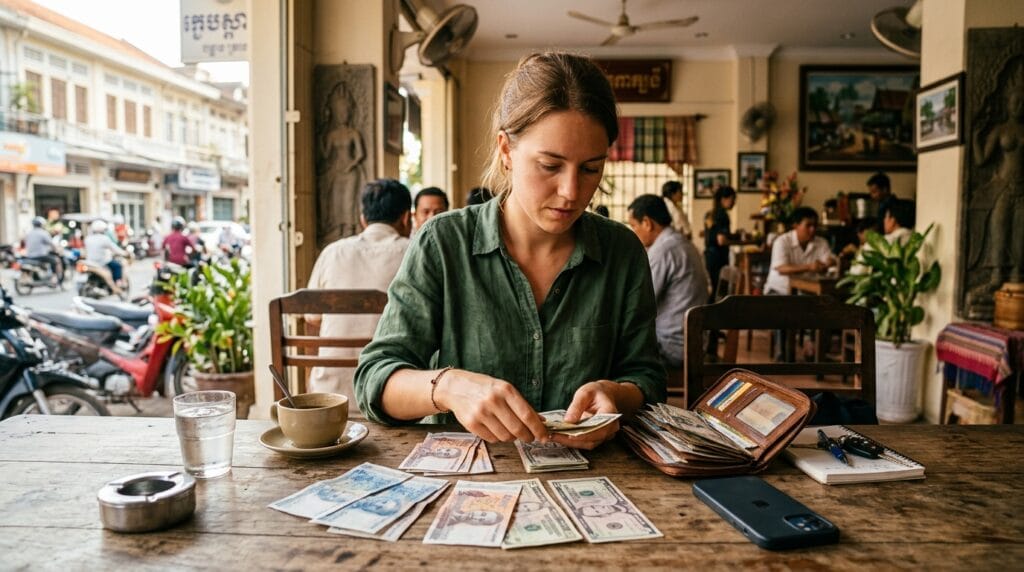
It is common to see prices displayed in US dollars, while smaller amounts of change may be given in Cambodian riel.
Foreigners should become familiar with both currencies.
For example, when receiving change, make sure you understand whether the amount is in dollars or riel. Also check your banknotes before accepting them.
For everyday expenses, it is useful to carry some small US dollar denominations and Cambodian riel.
Do not carry large amounts of cash unnecessarily. Keep your money secure and use reputable banks or ATMs when withdrawing cash.
5. Download Useful Apps
Your smartphone can make life in Cambodia considerably easier.
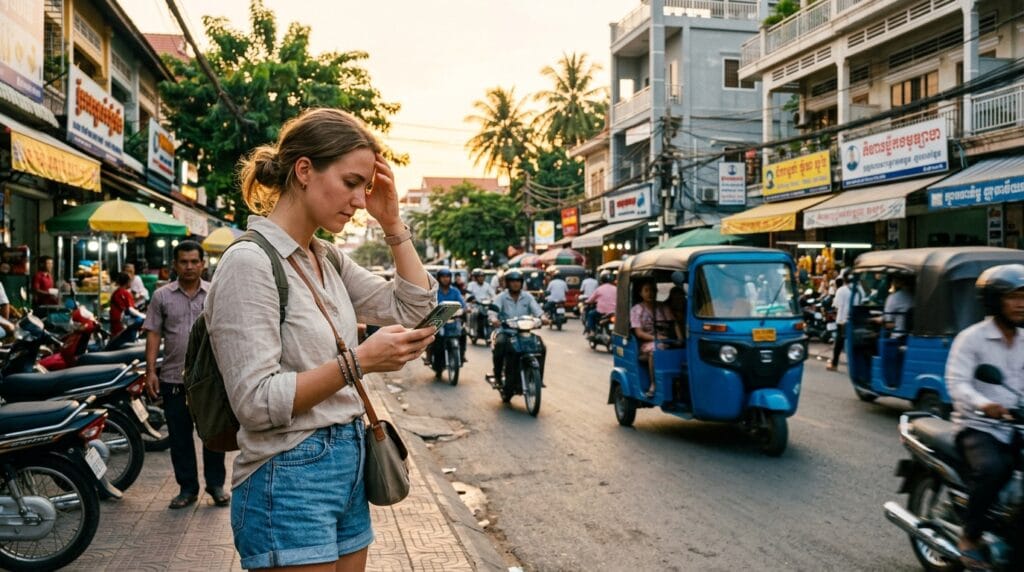
Before exploring the country, consider installing apps for:
- Maps and navigation
- Ride-hailing
- Food delivery
- Messaging
- Translation
- Mobile banking
- Currency conversion
Ride-hailing services are particularly useful in Phnom Penh and other major cities because they make it easier to arrange transportation without negotiating a price every time.
Google Maps can also help you find restaurants, supermarkets, pharmacies, shopping centers, cafes, and other services.
However, remember that map information is not always perfect. Business locations and opening hours can change, so it is sometimes worth confirming information directly.
6. Learn Basic Khmer Words
You do not need to speak fluent Khmer to live or travel in Cambodia, but learning a few basic words can make your experience much more enjoyable.
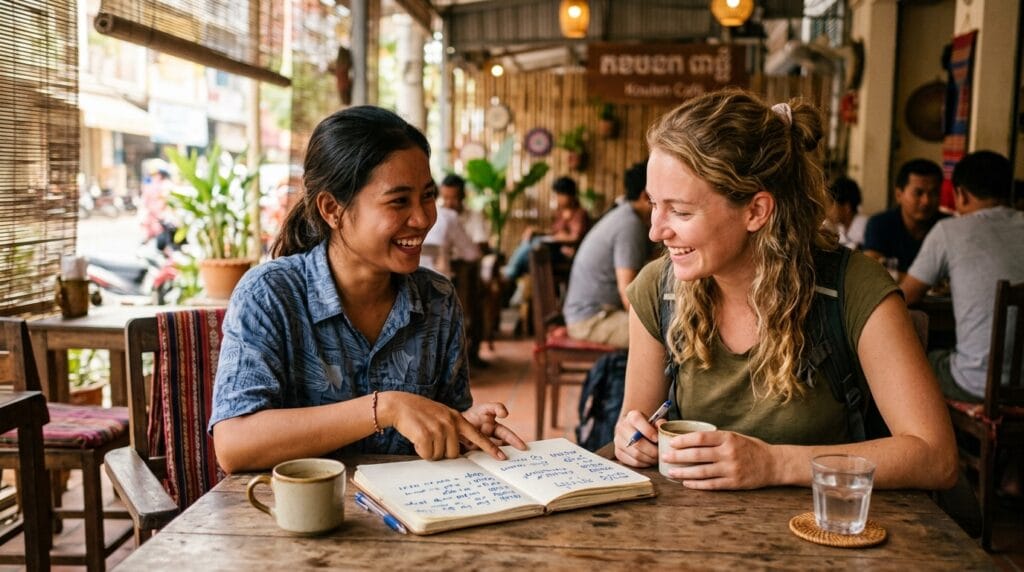
Useful expressions include:
- Susadei — Hello
- Arkun — Thank you
- Som toh — Sorry / Excuse me
- Baht — Yes, commonly used by men
- Cha — Yes, commonly used by women
- Ot te — No
Even a few words can show respect and help you build a friendly relationship with local people.
English is widely used in many hotels, restaurants, businesses, and tourist areas, particularly in Phnom Penh and Siem Reap. However, outside tourist areas, communication in English may be more limited.
A translation app can therefore be very useful.
7. Learn About Local Transportation
Cambodia offers several transportation options, including tuk-tuks, motorbike taxis, cars, buses, and private transportation.
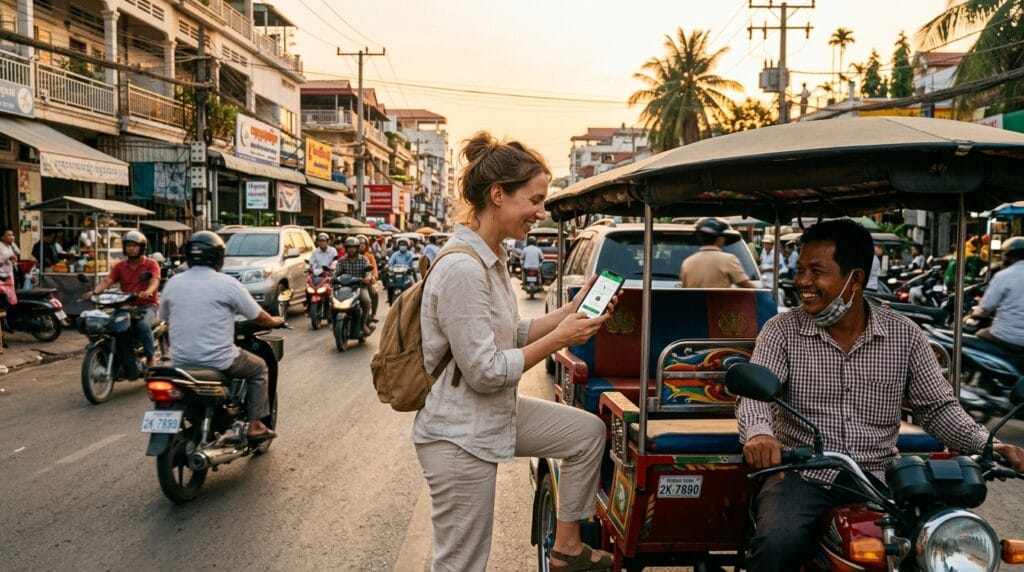
For foreigners, ride-hailing apps can be a convenient option because you can usually see the estimated fare before confirming the trip.
If you plan to stay for a long time, you may eventually consider renting or purchasing a motorbike. However, make sure you understand Cambodia’s traffic rules and licensing requirements before riding.
Traffic can be challenging for newcomers. Motorbikes, cars, tuk-tuks, pedestrians, and other vehicles often share busy roads, particularly in Phnom Penh.
Take your time and observe local traffic patterns before attempting to drive yourself.
8. Understand the Cost of Living
One of the first things long-term visitors should do is create a realistic monthly budget.
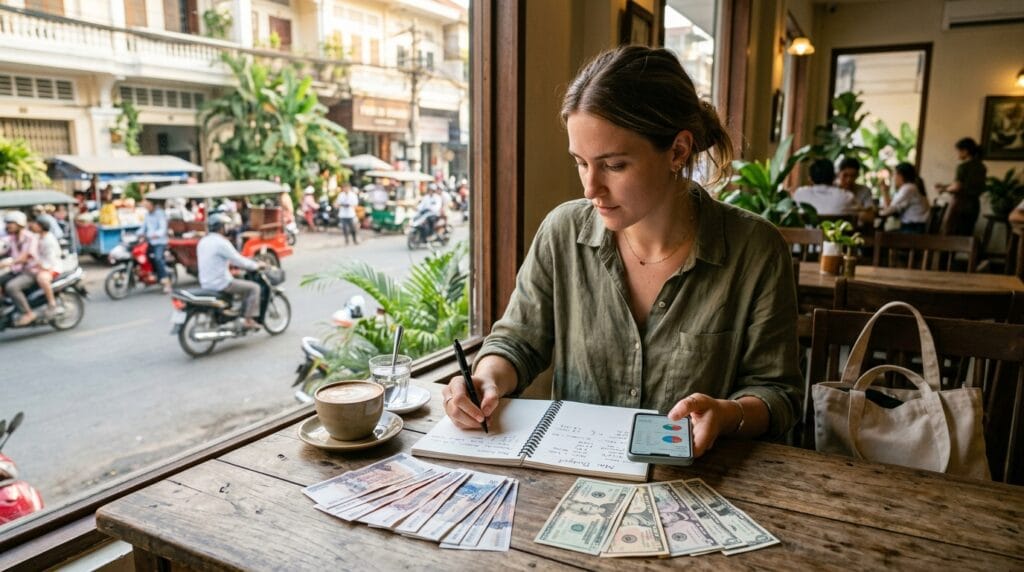
Your expenses may include:
- Accommodation
- Electricity
- Water
- Internet
- Mobile phone
- Transportation
- Food
- Entertainment
- Healthcare
- Insurance
- Visa or immigration-related expenses
The cost of living varies significantly depending on your lifestyle.
Eating at local restaurants and using local transportation can be relatively affordable, while international restaurants, premium apartments, imported products, and Western-style entertainment can increase your monthly expenses considerably.
Before deciding how much money you need each month, spend your first few weeks observing your actual spending habits.
9. Open or Arrange Access to Banking Services
For longer stays, having reliable access to money is important.
Depending on your circumstances and eligibility, you may want to explore Cambodian banking options. Major banks and financial institutions offer different services for residents and foreigners.
Before opening an account, ask about:
- Required documents
- Account types
- Minimum balances
- ATM fees
- International transfers
- Mobile banking
- Debit cards
- Currency exchange
Digital payments are also becoming increasingly common in Cambodia, so having a reliable payment method can make everyday transactions easier.
However, it is still wise to keep some cash available because not every small business accepts cards or digital payments.
10. Learn Basic Cambodian Etiquette
Understanding local culture can help foreigners avoid uncomfortable situations.
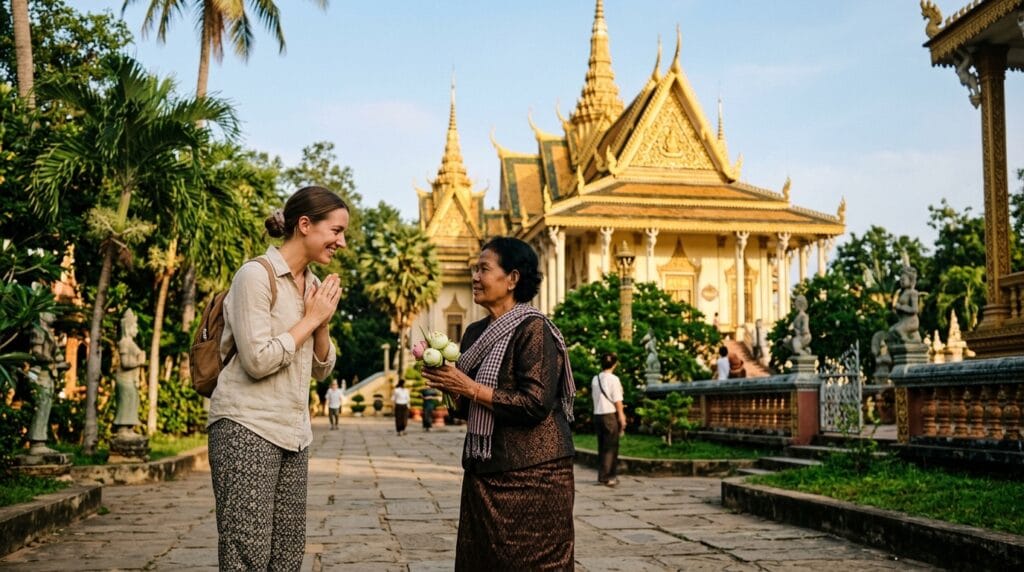
Cambodian society generally places importance on politeness and respect, particularly toward older people.
When visiting temples or religious sites, dress appropriately and behave respectfully. Avoid loud or disruptive behavior.
It is also generally polite to remove your shoes when entering certain homes, temples, or other places where shoes are traditionally removed.
When taking photographs of people, particularly monks or children, it is better to ask permission when appropriate.
You do not need to understand every aspect of Cambodian culture immediately. Being polite, observant, and willing to learn goes a long way.
11. Find Your Local Supermarkets, Markets, and Pharmacies
After settling into your neighborhood, take some time to identify essential places nearby.
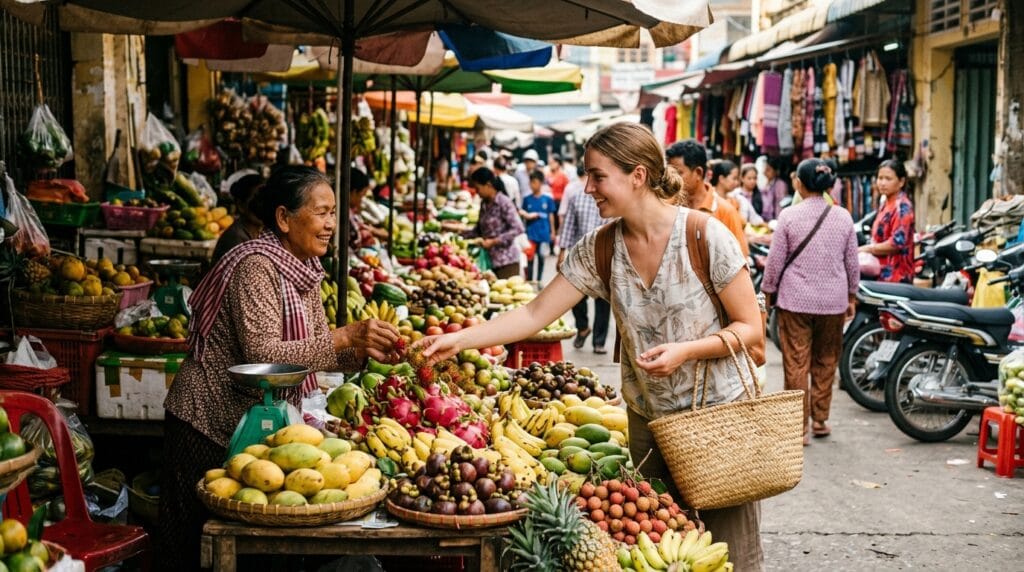
Find at least one:
- Supermarket
- Local market
- Pharmacy
- Clinic or hospital
- Bank or ATM
- Convenience store
- Laundry service
- Restaurant or food market
Knowing where these places are will make daily life much easier.
Local markets can also be a good way to experience Cambodian food and everyday life. Supermarkets may be more convenient for imported products and familiar brands.
12. Check Your Health and Travel Insurance
Before traveling or moving to Cambodia, foreigners should consider appropriate travel or health insurance.

Healthcare options vary significantly between locations and facilities. Phnom Penh has a wider selection of private healthcare services than many smaller cities.
If you take regular medication, bring enough for your initial stay and keep the medication in its original packaging where possible.
Also keep important medical information and insurance details accessible.
For a long-term stay, research healthcare facilities near your accommodation before you actually need one.
13. Be Careful With Personal Security
Cambodia is a welcoming destination for many foreigners, but visitors should still use normal precautions.
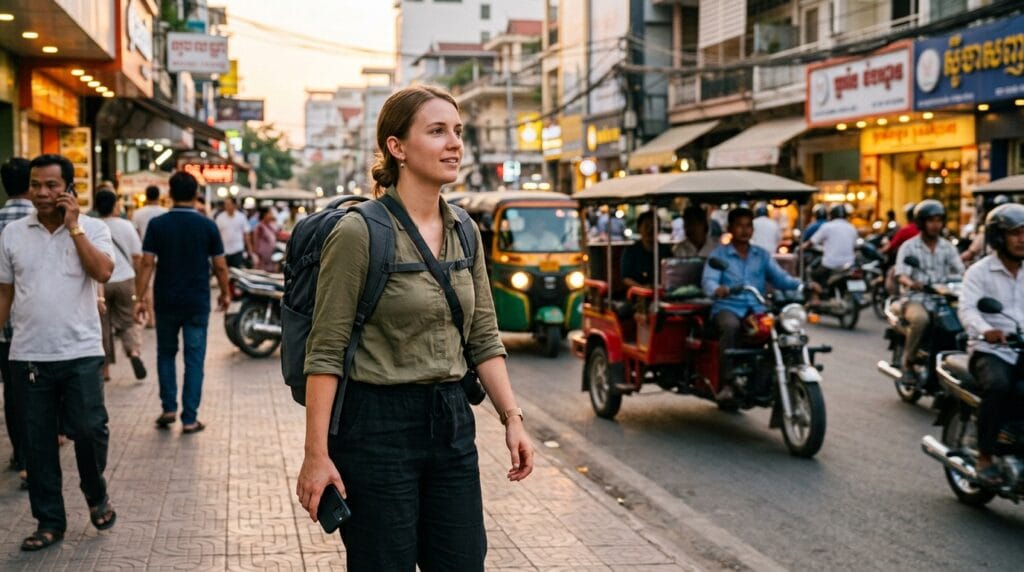
Keep your phone, wallet, passport, and other valuables secure, particularly in crowded areas.
Avoid displaying large amounts of cash and be careful when using your phone near busy roads.
At night, use reliable transportation and stay aware of your surroundings.
If you rent an apartment, check the building’s security arrangements, including entrance controls, CCTV, lighting, and whether there is security staff.
14. Explore Your Neighborhood Before Traveling Far
When you first arrive, it can be tempting to immediately visit every famous destination in Cambodia.
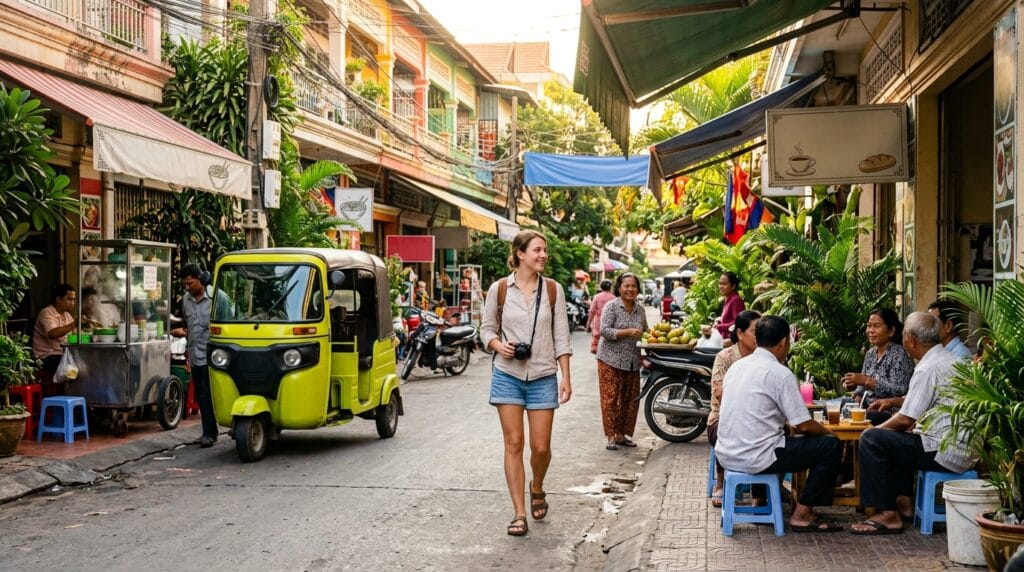
However, spending some time exploring your own neighborhood first can be extremely useful.
Walk or travel around your local area and discover:
- Local restaurants
- Coffee shops
- Markets
- Parks
- Gyms
- Shopping centers
- Pharmacies
- Transportation options
This helps you become comfortable with your surroundings and gives you a better understanding of everyday Cambodian life.
15. Respect the Local Culture and Enjoy Cambodia
Finally, give yourself time to adjust.
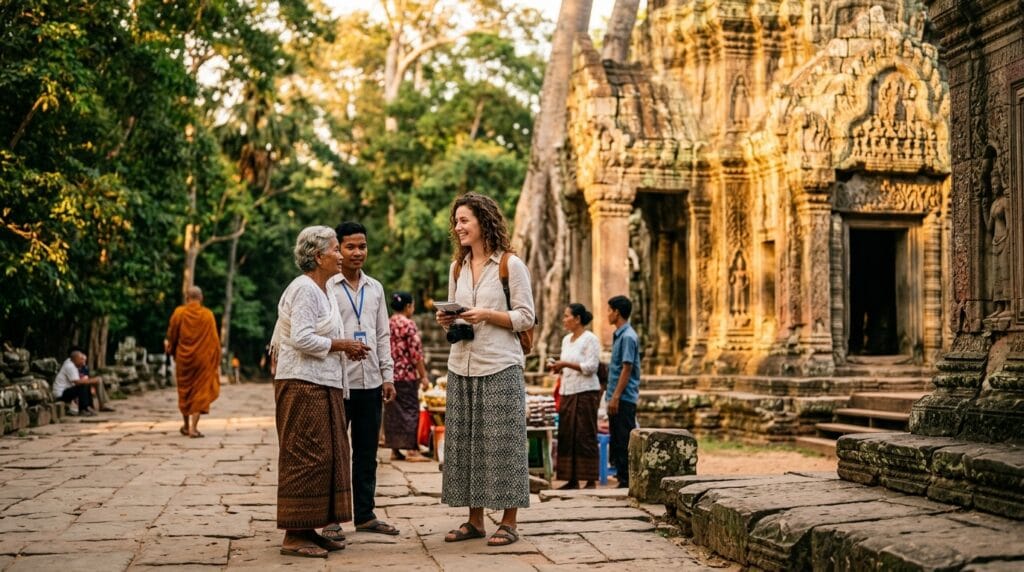
Cambodia may be different from your home country in terms of traffic, food, weather, communication, customer service, and everyday routines. Some things may feel unfamiliar at first.
Instead of expecting everything to work exactly as it does at home, try to remain patient and flexible.
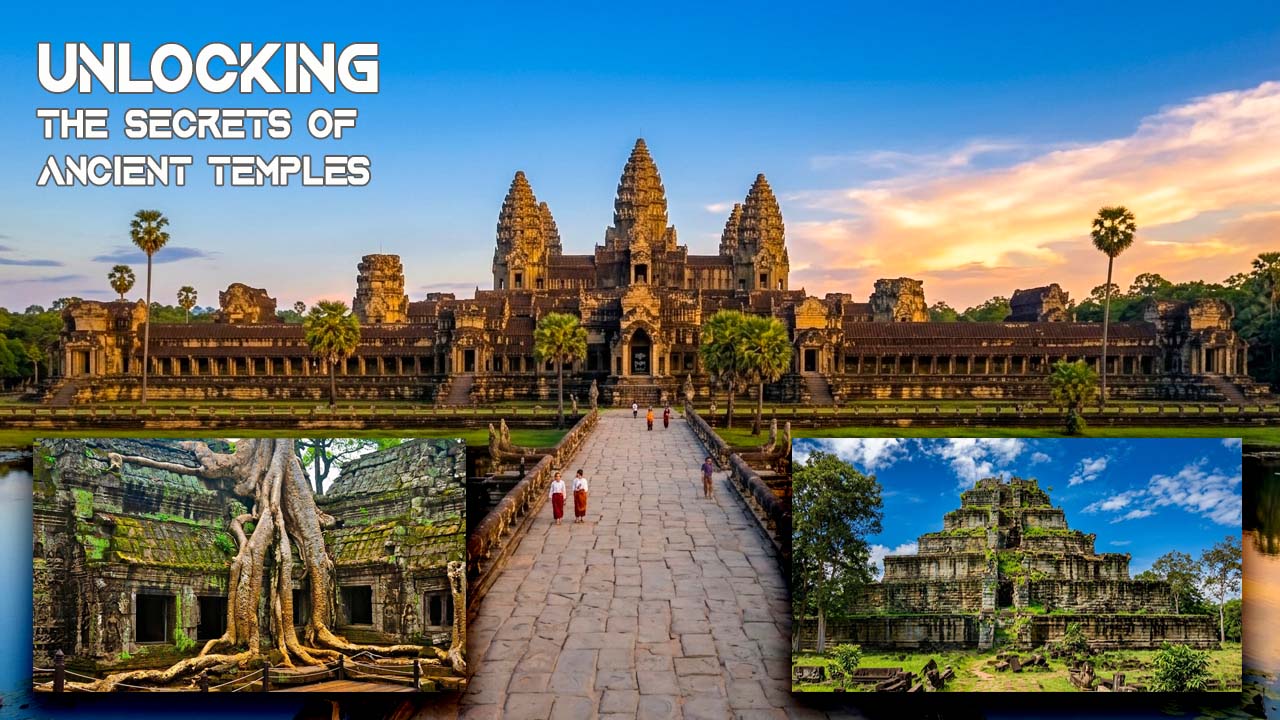
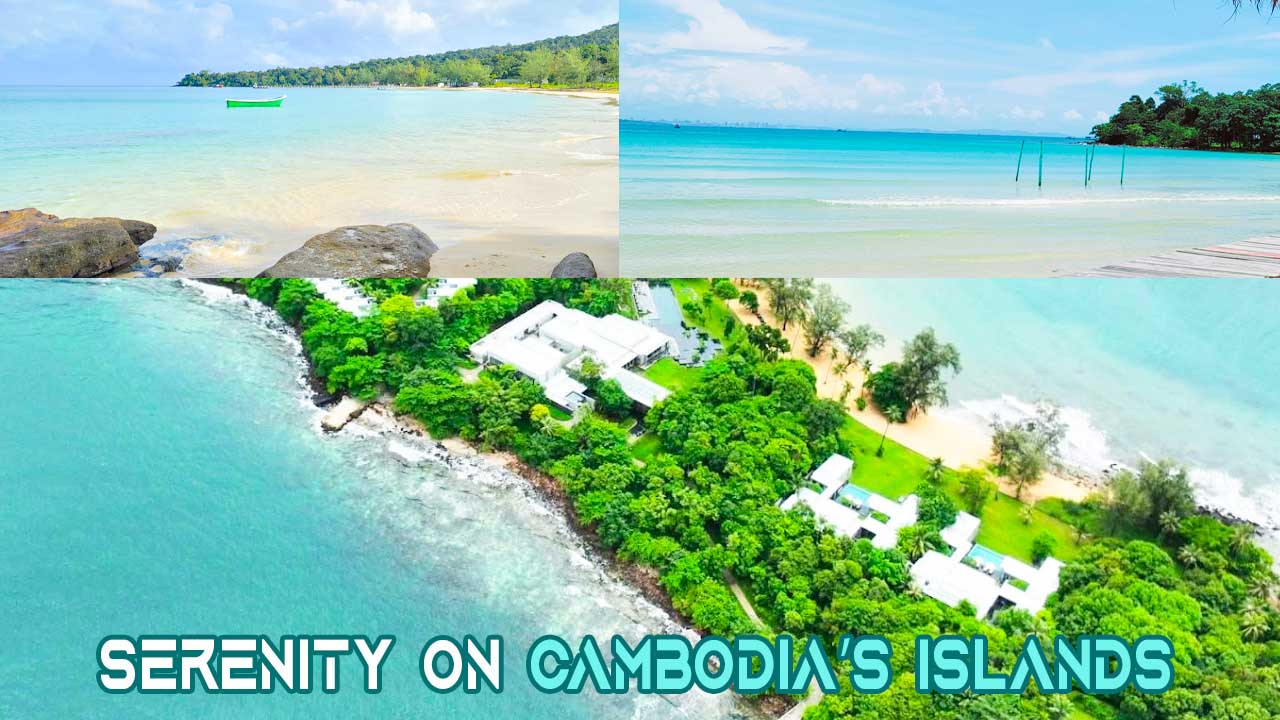
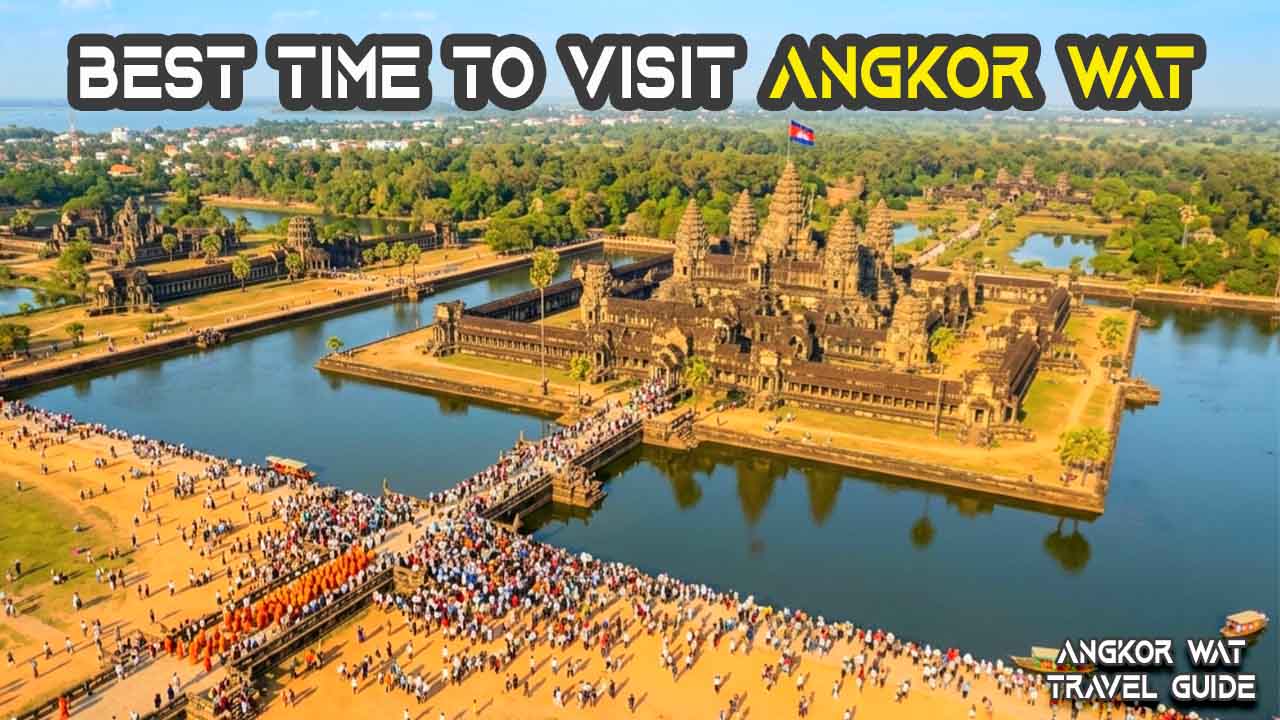
Cambodia has a lot to offer, from the historic temples of Angkor to Phnom Penh’s growing restaurant and café scene, beautiful coastal areas, countryside communities, and a rich cultural heritage.
The best way to enjoy the country is to stay curious and respectful.
Final Thoughts
Arriving in Cambodia is the beginning of an exciting experience, whether you are here for a short holiday or planning to make the country your home.
Your first priorities should be getting your immigration documents in order, securing suitable accommodation, obtaining a local SIM card, understanding money and transportation, and learning a little about Cambodian culture.
If you are staying long term, take additional time to understand rental contracts, utilities, banking, healthcare, transportation, and your monthly cost of living.
Most importantly, do not feel that you need to understand everything immediately. Give yourself time to adjust, ask questions, and learn from your surroundings.
With a little preparation, your first days in Cambodia can be much easier—and you can spend more time enjoying what the country has to offer.
Frequently Asked Questions (FAQ)
1. What should foreigners do first after arriving in Cambodia?
Foreigners should first make sure their immigration documents are in order, secure their accommodation, get a local SIM card, and arrange reliable transportation. It is also useful to exchange or withdraw some Cambodian riel and familiarize yourself with the local area.
2. Do foreigners need a SIM card in Cambodia?
A local SIM card is highly recommended, especially for longer stays. Mobile internet is useful for maps, ride-hailing, translation, messaging, banking, and contacting hotels or landlords. You will generally need your passport to register a SIM card.
3. Can foreigners use US dollars in Cambodia?
Yes. US dollars are widely accepted in Cambodia, particularly in Phnom Penh, Siem Reap, and other tourist areas. However, Cambodian riel is commonly used for smaller transactions and change, so foreigners should become familiar with both currencies.
4. What transportation is best for foreigners in Cambodia?
Ride-hailing services, tuk-tuks, taxis, and private cars are convenient options for foreigners. Ride-hailing apps can be particularly useful because they make it easier to arrange transportation and see the fare before starting a trip.
5. What should foreigners know about Cambodian culture?
Foreigners should be respectful of local customs, dress appropriately when visiting temples, avoid disruptive behavior, and ask permission before photographing people when appropriate. Learning a few basic Khmer words and showing patience and politeness can also help create positive interactions with local people.