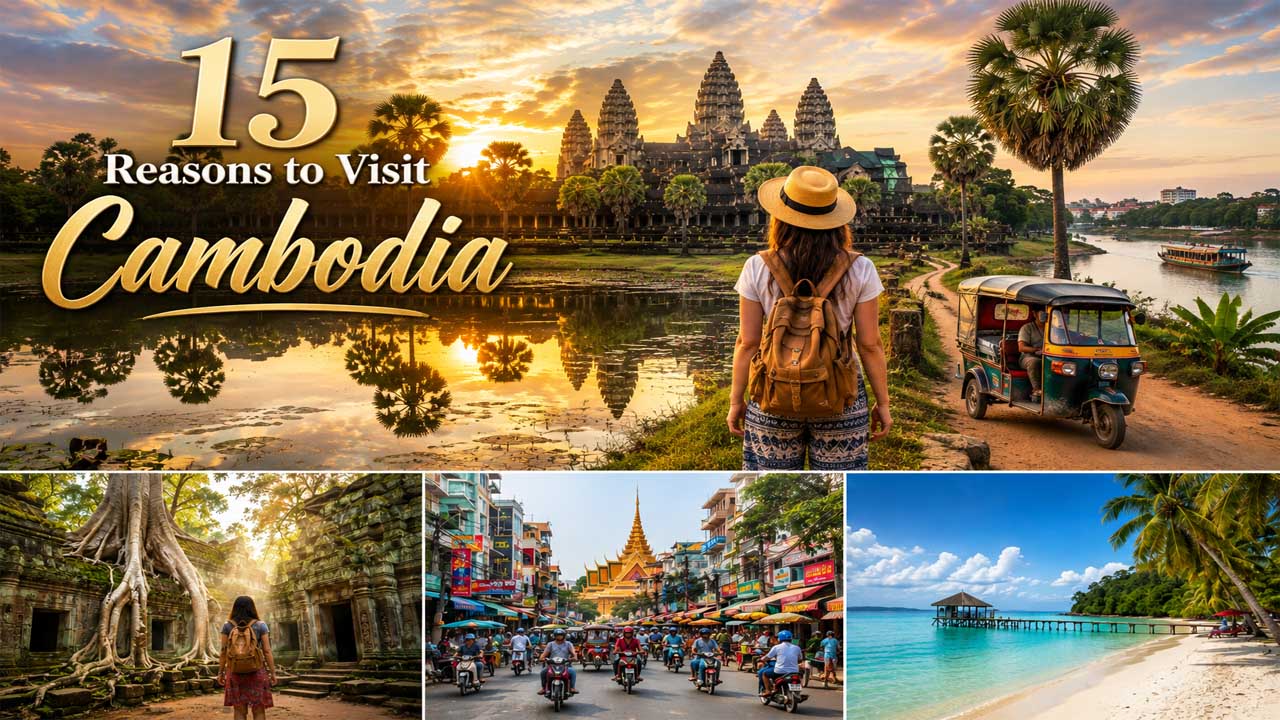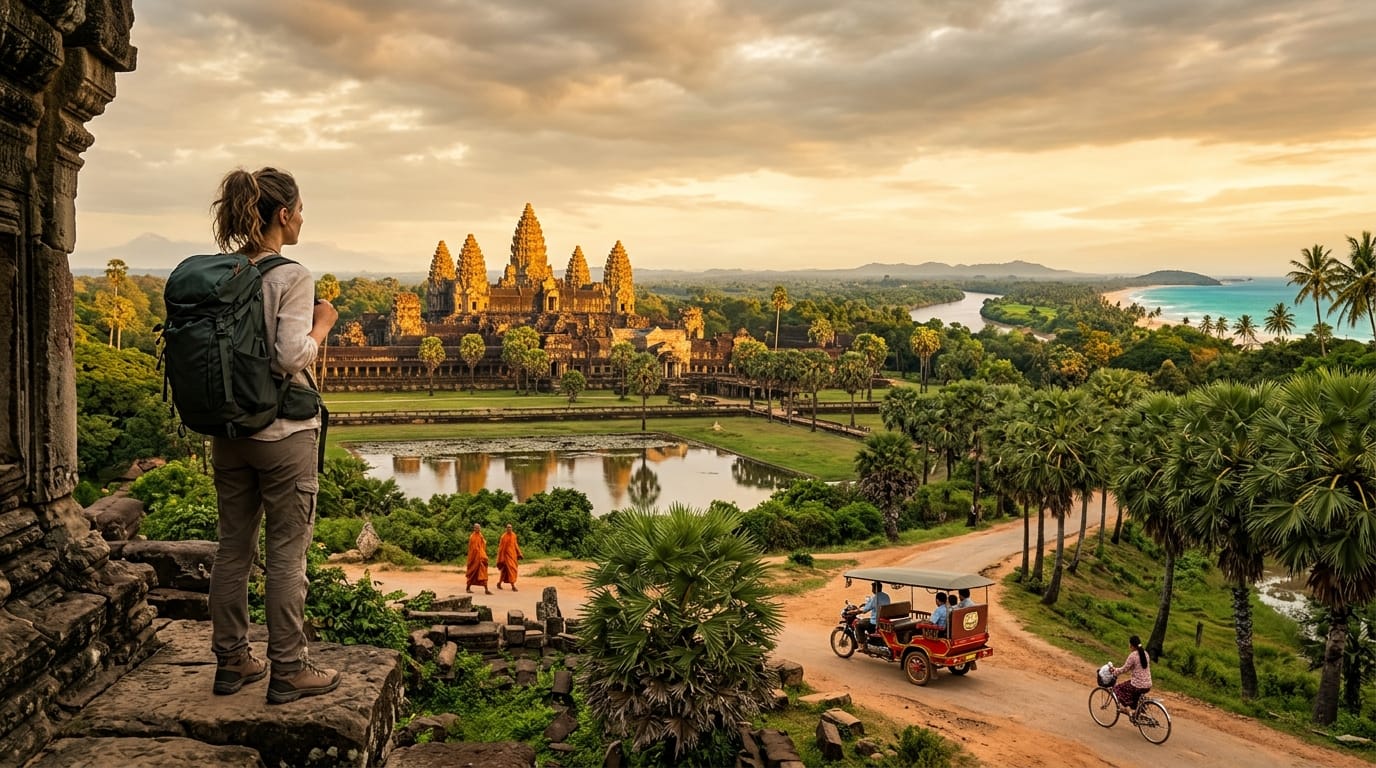


When people think of Cambodia, the first image that inevitably comes to mind is the majestic stone towers of the Khmer Empire. For centuries, these monumental structures lay hidden beneath dense jungle canopies, wrapped in mystery and guarded by nature. Today, they stand as a testament to one of the most powerful, artistically brilliant, and technologically advanced civilizations in human history.
To walk through Cambodia’s temples is not merely to sightsee; it is to step into a grand historical narrative told through stone. Every carving, every alignment with the stars, and every lingering smile on a stone face holds a secret. This historical travel guide is designed to help you look past the surface and unlock the deep mysteries hidden within Cambodia’s ancient sanctuaries.
1. Angkor Wat: A Cosmic Map Placed on Earth
Built in the early 12th century by King Suryavarman II, Angkor Wat is the absolute pinnacle of Khmer architecture. While it is celebrated as the world’s largest religious monument, its true genius lies in its profound symbolic design. It was built not just as a temple for the Hindu god Vishnu, but as a physical manifestation of the universe.

The Cosmic Architecture
Angkor Wat is a literal map of the cosmos executed in stone. The central, highest tower represents Mount Meru, the mythical home of the gods in Hindu and Buddhist cosmology. The surrounding smaller peaks represent the mountain ranges of the universe, while the massive, expansive moat surrounding the complex represents the cosmic oceans. When you cross the causeway over the moat, you are symbolically leaving the earthly realm and entering the domain of the divine.
The Solar Secret: The Equinox Phenomenon
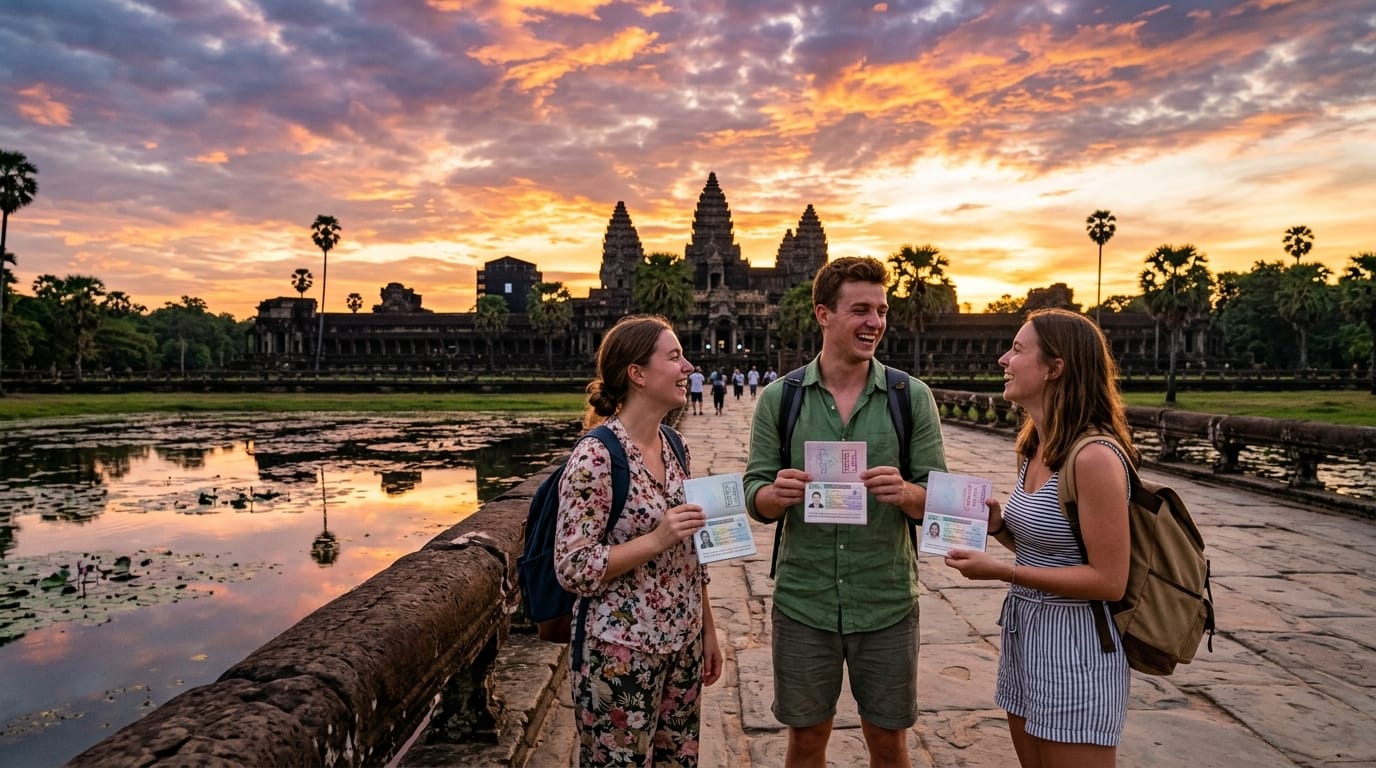
The builders of Angkor Wat possessed an incredibly advanced understanding of astronomy and mathematics. Twice a year—during the Spring Equinox in March and the Autumn Equinox in September—a spectacular phenomenon occurs. If you stand at the western causeway at dawn, the sun rises precisely over the tip of the central peak of Angkor Wat. This perfect alignment was intentionally engineered to mark the changing of seasons and to reflect the king’s divine connection to cosmic order.
2. Bayon Temple: The Enigmatic Smile of the Jungle
Located at the exact physical center of the ancient walled city of Angkor Thom, the Bayon Temple is a stark, surreal contrast to the orderly classical lines of Angkor Wat. Constructed in the late 12th century by King Jayavarman VII—Cambodia’s most prolific Buddhist ruler—the Bayon is a labyrinth of stone galleries, narrow dark corridors, and towering spires.

The Mystery of the Faces
The defining feature of the Bayon is its collection of massive, serene stone faces looking out toward the four cardinal directions. There are over 200 of these gigantic faces, all bearing a faint, enigmatic smile.
- Who do they represent? For decades, historians have debated their identity. The prominent theory suggests they are a fusion of Avalokiteshvara (the Buddhist bodhisattva of compassion) and King Jayavarman VII himself.
- The Omnipresent Gaze: The intentional placement ensures that no matter where you stand in the temple courtyard, several pairs of stone eyes are quietly observing you—a ancient psychological masterpiece meant to project the king’s all-seeing protection and authority.
The Bas-Reliefs: A Window into Everyday Life
While the upper levels of Bayon look to the heavens, the outer gallery walls keep their feet firmly on the ground. The detailed bas-reliefs here do not just depict gods and battles; they showcase the everyday lives of ordinary 12th-century Khmer people. You can see carvings of bustling marketplaces, people roasting meat, women giving birth, cockfights, and Khmer soldiers fighting alongside Chinese mercenaries against the rival Champa Kingdom.
3. Ta Prohm: Where Nature and Humanity Coexist
Unlike most temples in the Angkor Archaeological Park, which were meticulously cleared of vegetation and restored, Ta Prohm was intentionally left largely as it was found. Built by King Jayavarman VII in honor of his mother, Ta Prohm is a hauntingly beautiful example of what happens when a mighty civilization is reclaimed by the natural world.

The Grip of the Silk-Cotton Trees
The real magic of Ta Prohm is the symbiotic relationship between the stone architecture and the colossal silk-cotton and strangler fig trees. Massive, serpentine roots cascade down ancient walls, gripping the doorways and stabilizing the collapsing galleries. The roots act as both destroyer and protector; removing them would cause the fragile stone structures to completely collapse.
The Echo Chamber
Deep within the maze of Ta Prohm lies a small, unadorned stone tower known as the Echo Chamber. Local lore suggests it was used by the king for spiritual cleansing or mourning. If you stand with your back flat against the wall and thump your chest, a deep, booming echo vibrates through the room. Curiously, if you clap your hands or shout, the room remains virtually silent. The chamber only resonates with the specific frequency of a heartbeat or chest strike.
4. Koh Ker: The Seven-Tiered Pyramid
For travelers willing to venture about 120 kilometers northeast of Siem Reap, the remote archaeological site of Koh Ker offers an entirely different architectural enigma. Now a recognized UNESCO World Heritage site, Koh Ker was briefly the capital of the Khmer Empire in the 10th century under the usurper King Jayavarman IV.

The Mesoamerican Enigma
The centerpiece of Koh Ker is Prasat Thom, a spectacular 36-meter-tall pyramid with seven distinct tiers. Visually, it looks entirely out of place in Southeast Asia, bearing an uncanny resemblance to the Mayan pyramids of Mexico and Central America.
- The Hidden Portal: Legends state that at the very top of this steep pyramid lay a vertical shaft leading down to a deep pit. Local myths claimed this shaft was a portal to the underworld, used by the king to commune with spirits or cast down sacrifices to secure his absolute power.
Historical Travel Tips for Explorers
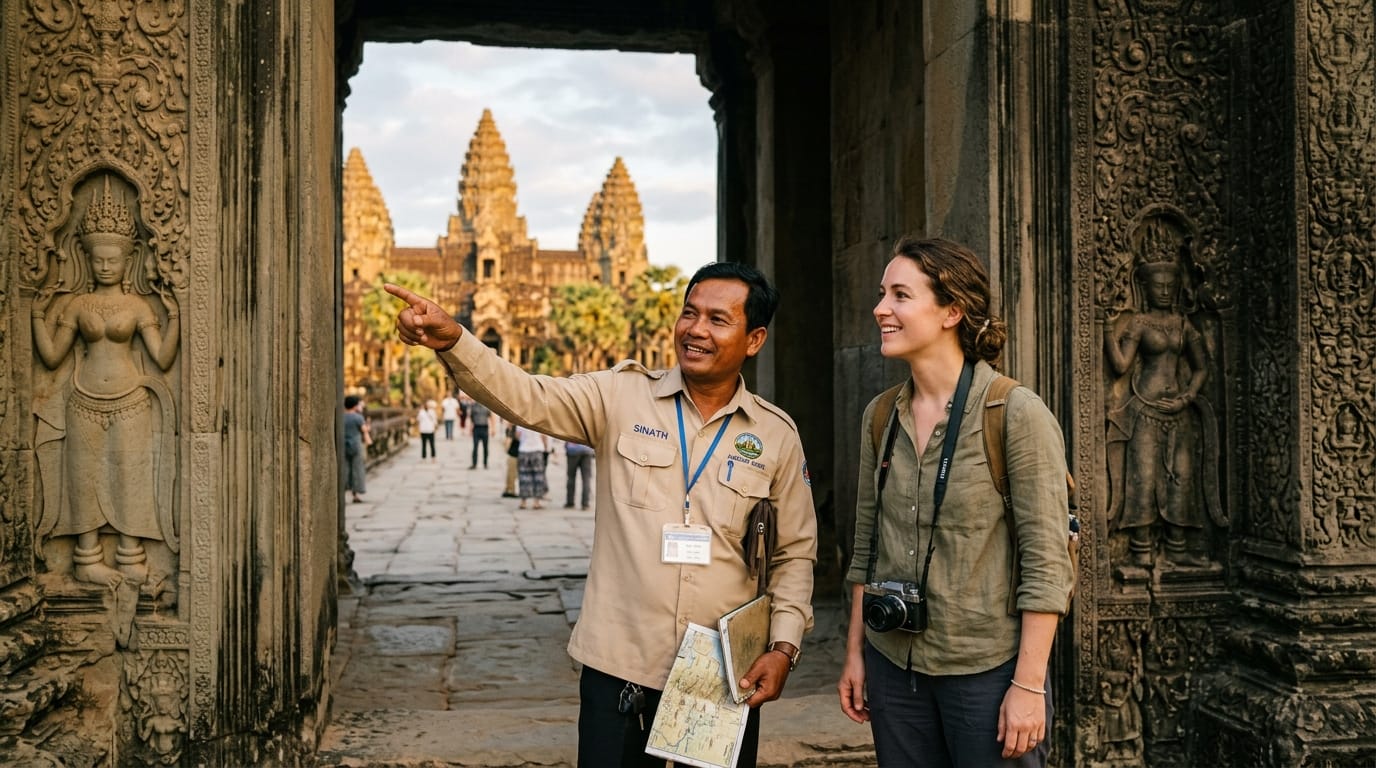
- Hire a Certified Guide: The true value of Cambodia’s temples lies in their stories. A licensed guide can point out subtle details—like hidden graffiti left by 16th-century Japanese pilgrims or specific mythological battles hidden in the bas-reliefs—that you would easily miss on your own.
- Dress respectfully: These are active places of worship for Cambodians. Both men and women must cover their shoulders and knees. Lightweight, breathable linen or cotton clothing is ideal for staying cool while respecting the dress code.
- Beat the Heat and the Crowds: The best way to experience the temples is to arrive right when the gates open at 5:30 AM. Watching the sunrise over Angkor Wat is spectacular, but walking through the quiet, misty corridors of Bayon or Ta Prohm before the mid-day heat and large tour buses arrive is truly unforgettable.
Final Thoughts
The ancient temples of Cambodia are far more than just relics of a bygone era; they are living libraries of human ambition, spiritual devotion, and artistic genius. As you wander through these historic structures, walk slowly and touch the cool, weathered sandstone. If you listen closely, you can almost hear the echoes of the empire that once shook the foundations of Southeast Asia.