
In the world of real estate, there is a concept known as the “Infrastructure Multiplier.” It suggests that for every dollar invested by a government into high-level transport infrastructure, four to five dollars of private investment follow. In Cambodia, we are currently witnessing the largest multiplier effect in the nation’s history.
With the Techo International Airport (TIA) officially operational as of late 2025, the “center of gravity” for Phnom Penh has shifted. No longer is the city expanding only toward the north and west; the South has become the new frontier for institutional capital and luxury residential living.
1. From Farmland to “Aerotropolis”
The most profound change brought by TIA is the birth of the Aerotropolis—an urban sub-center where the layout, infrastructure, and economy are centered around the airport.
Covering over 2,600 hectares across Kandal Steung and Sa’ang districts, TIA is not just a place where planes land. It is an economic engine. In 2026, we are seeing the first phase of “Airport City” coming to life. This includes:
-
Logistics Hubs: Warehousing and cold-storage facilities are booming along Ring Road 3.
-
Hospitality Clusters: Mid-range and luxury hotels are being built to serve the projected 13 million annual passengers.
-
Retail Expansion: Following the success of AEON 3, new “strip malls” and commercial plazas are appearing to serve the growing population of airport employees.
2. The Hun Sen Boulevard (60M Road) Surge
If you want to see where the money is moving, look no further than Hun Sen Boulevard. Often called “The 60M Road,” this 9.1-kilometer artery is the primary link between central Phnom Penh and the new airport.
In early 2024, land prices here were already high, but the 2026 reality has pushed them into a new tier.
-
Commercial Land: Prime plots along the boulevard are now commanding between $2,500 and $4,000 per square meter.
-
Residential Shift: Major developers like Chip Mong, Peng Huoth, and Urban Village have shifted from speculative building to “community building.” They are creating gated communities (Boreys) and high-rise condos that cater to a new demographic: the “Commuter Elite.” These are professionals who work in the city but want easy access to the airport for regional business.
3. District Spotlight: Dangkao and Meanchey
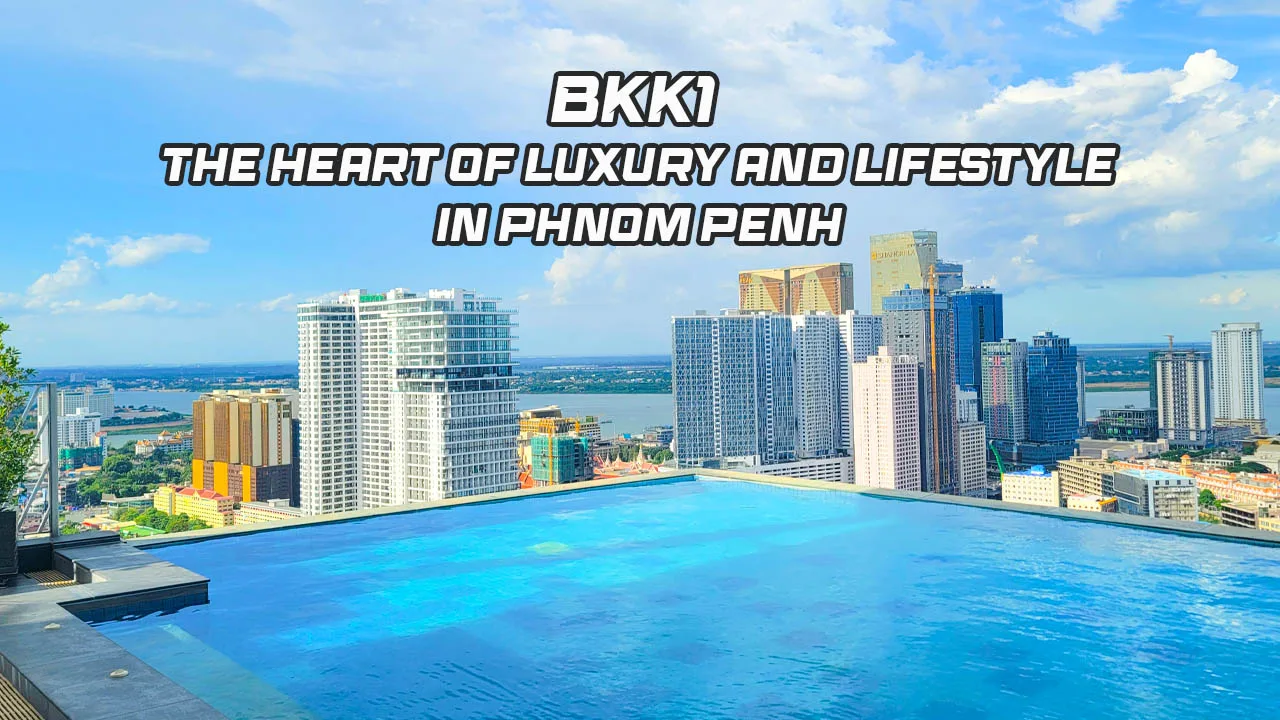
While BKK1 remains the lifestyle hub, the districts of Dangkao and Meanchey are the real “growth stars” of 2026.
-
Dangkao District: Previously seen as an industrial outskirts, Dangkao is seeing the highest volume of new landed property (Borey) projects. With over 100 active developments, it has become the “suburban dream” for the rising Khmer middle class.
-
Meanchey District: This area is in “catch-up mode.” As land in the city center becomes unaffordable, Meanchey offers a strategic middle ground. It is close enough to the riverside for leisure but perfectly positioned for the airport commute.
4. Connectivity: The 27km Bridge to the World
The physical airport is only half the story. The Airport Access Road and the Techo Expressway have fundamentally changed the “Time-Distance” equation. In 2023, a trip from the Independence Monument to the new airport site could take over an hour. In 2026, via the dedicated flyovers and expressways, that journey is under 30 minutes.
When travel time drops, property values rise. This connectivity has “unlocked” thousands of hectares of previously unusable land, turning it into prime residential territory.
5. The Investment Cycle: 2026 and Beyond
Investors often ask: “Is it too late to buy?” To answer this, we must look at the Three Phases of Airport Growth:
-
The Speculative Phase (2018–2023): Buying “raw dirt” and hoping for the best. This phase is over.
-
The Infrastructure Phase (2024–2026): Buying strategic plots or units as the roads and terminal are completed. This is where we are now.
-
The Operational Phase (2027+): Buying for rental yield and long-term commercial leases as the “Aerotropolis” reaches full capacity.
For the Sakmai reader, the current phase offers the best balance of risk and reward. The uncertainty of “if” the airport will be built is gone. The certainty of “growth” is here.
Verdict: The Final Analysis
The Reality Check: The opening of Techo International Airport has effectively “doubled” the size of the investable area in Phnom Penh. However, not all land in the South is equal. Success in 2026 requires looking at zoning. Residential land near the airport is risky due to noise, but Commercial and Industrial land in the same area is a gold mine.
The Pros:
-
Proven Appreciation: Land along the 60M Road has outperformed almost every other district in the capital over the last 5 years.
-
GDP Contribution: Experts estimate the airport zone will contribute up to 5% to Cambodia’s annual GDP growth, ensuring long-term stability.
-
Quality of Life: The South is being built with wider roads and more green space than the congested North.
The Cons:
-
Supply Levels: There is a high volume of new Borey units. Investors must choose developers with a proven track record (like OCIC or Chip Mong) to ensure resale value.
-
Noise Path: Be careful of projects directly under the Phase 1 flight paths.
Final Score: 9.1/10
“Southern Phnom Penh is no longer a ‘future’ prospect—it is the present reality of Cambodian wealth. If you are looking to build a portfolio that will be relevant in 2030, the South is the only place to be.”
Frequently Asked Questions (FAQ)
1. How has the airport opening affected rental prices in BKK1? Surprisingly, BKK1 remains stable. While the South is growing, BKK1 is the “Lifestyle Hub.” However, we are seeing “Business Travelers” shift their stays to the South to avoid city traffic before early flights.
2. Is the “Airport City” fully built yet? No. Phase 1 (13 million passengers) is operational. Phase 2 and 3 will continue through 2030 and 2050. This means the investment window is still wide open for those looking for 10-year gains.
3. What happens to the old airport (PNH) land? There is significant speculation that the old airport site will be redeveloped into a massive mixed-use “Smart City” or green park. If this happens, property values in the Sen Sok area will see a second massive surge.
4. Can foreigners own land near the airport? Directly, no. However, the Nominee Structure or Land Holding Companies remain the standard 2026 method. Alternatively, many foreigners are buying Strata-titled Shophouses or Condos in the area.
5. What is the best “Entry Level” investment in the South? Look for 1-bedroom condos in “Satellite Cities” along the 60M Road. These are being marketed at $60,000 to $90,000 and are expected to have a high occupancy rate from airport and logistics staff.