

Gold has been the backbone of wealth in Cambodia for generations. Whether it is stored in a family safe or worn as “Maas Toek Dop” (24K gold) during a wedding, the yellow metal is more than just jewelry—it is a financial insurance policy.
In 2026, with global economic shifts, high inflation, and geopolitical uncertainty, gold has reached record-breaking prices. But for a beginner, the market can be confusing. Should you buy 1 Chi or 1 Damlung? Is 18K better than 24K? This guide will walk you through everything you need to know about starting your gold investment journey in the Kingdom.
1. Why Invest in Gold in 2026?
In a world of digital banking and cryptocurrency, why does physical gold still matter?
- Safe Haven Asset: When stock markets are volatile or international trade wars occur, gold usually increases in value. It is the “safe haven” where big investors hide their money.
- Inflation Hedge: As the cost of goods (like rice, fuel, and rent) goes up, the purchasing power of cash goes down. Gold historically keeps its value, meaning 1 Chi of gold today will likely buy the same amount of goods 10 years from now.
- High Liquidity in Cambodia: Unlike real estate, which can take months to sell, gold can be converted into cash in less than 30 minutes at any reputable shop in Central Market (Phsar Thmei) or Orussey Market.
2. Understanding Cambodian Gold Units
Before you walk into a shop, you must understand how we measure gold. Cambodia uses a unique system that differs from the Western “Ounce” or “Gram.”
| Khmer Unit | Breakdown | Gram Equivalent |
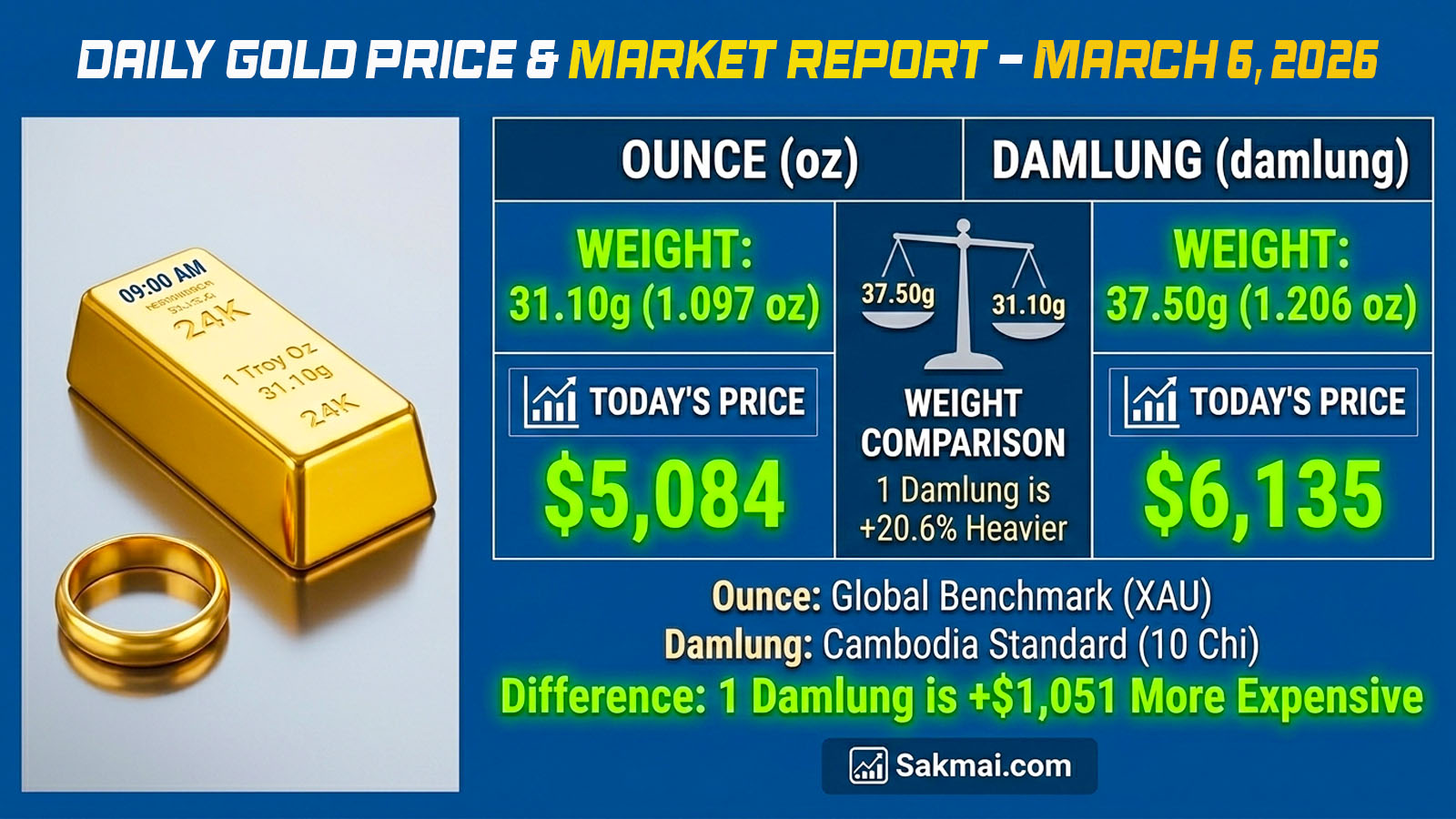
| 1 Damlung (តម្លឹង) | 10 Chi | 37.5 grams |
| 1 Chi (ជី) | 10 Hun | 3.75 grams |
| 1 Hun (ហ៊ុន) | 10 Ly | 0.375 grams |
Pro Tip: If you are looking at international gold prices (XAU/USD), they are priced in Ounces. One Troy Ounce is approximately 31.1 grams, which is slightly less than 1 Cambodian Damlung. Always check a converter before assuming the price is the same!
3. 24K vs. 18K: Which Should You Buy?
This is the most common question for new investors.
24K Gold (Maas Toek Dop / មាសទឹកដប់)
- Purity: 99.9% pure gold.
- Best For: Pure investment and wealth storage.
- Pros: It has the highest resale value and the smallest “spread” (the difference between buying and selling price).
- Cons: It is very soft. If you wear a 24K ring every day, it will scratch, bend, or lose its shape.
18K Gold (Maas See / មាសហ្សី)
- Purity: 75% gold, mixed with 25% other metals (like copper or silver) for strength.
- Best For: Daily wear jewelry, engagement rings, and luxury watches.
- Pros: Much more durable and scratch-resistant. It holds diamonds and stones securely.
- Cons: Lower resale value. When you sell 18K back to a shop, you lose more money on “craftsmanship fees” compared to 24K bars.
4. How to Buy Gold Safely in Cambodia
Cambodia has thousands of gold shops, but not all are created equal. Follow these steps to ensure you are getting a fair deal.
A. Choose Reputable Shops
Stick to well-known districts like Phsar Thmei (Central Market) or Phsar Olympic. Look for shops that have been in business for decades. In 2026, many reputable shops also provide digital receipts and are registered with the Ministry of Commerce.
B. Check the “Live” Price
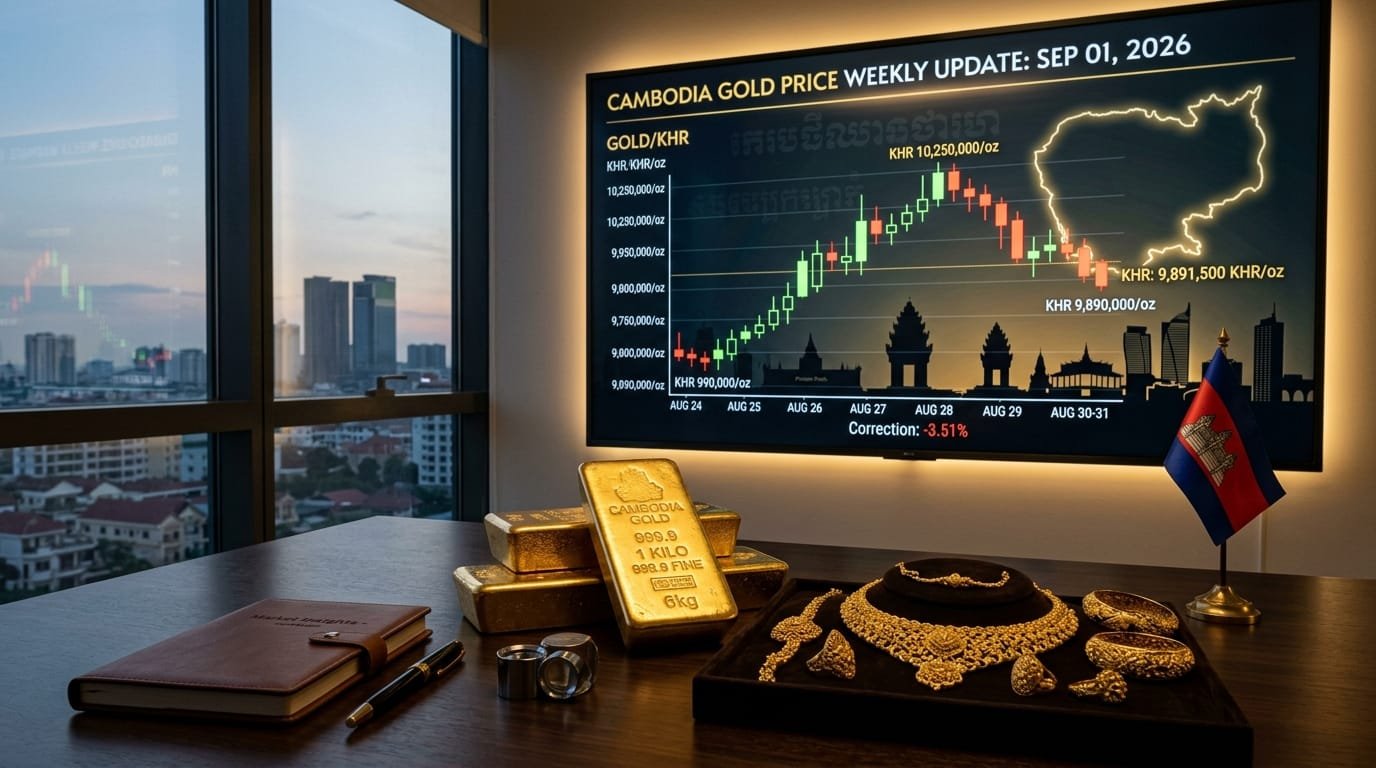
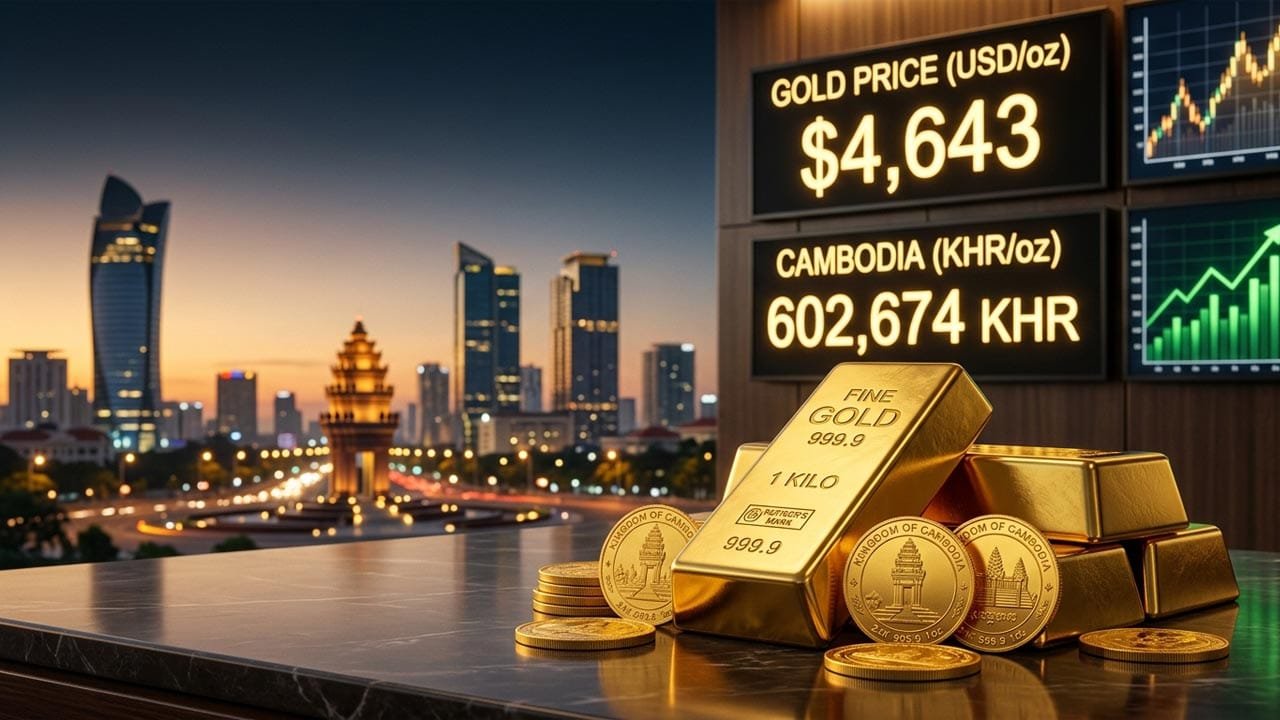
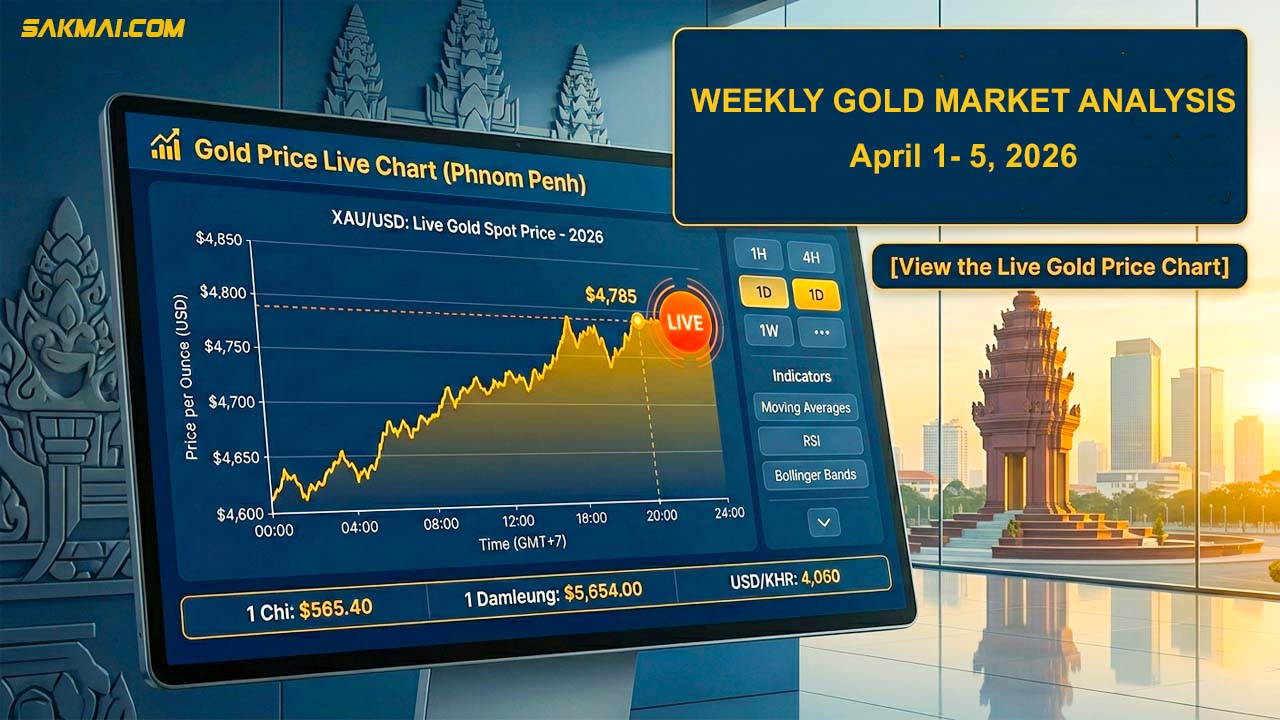
Gold prices change twice a day—once in the morning and once in the afternoon. Before you go, check Sakmai.com for the latest live report. Reputable shops will have a digital board showing the “Buy” and “Sell” prices. If a shop refuses to show you a clear price board, walk away.
C. The “Receipt” is Your Life-Line
Always ask for a formal receipt (Vinvode). A good receipt should include:
- The date and time of purchase.
- The exact weight (Damlung, Chi, Hun).
- The purity (24K or 18K).
- The shop’s “Buy Back” policy (usually a percentage like 95-98%).
5. Investment Strategies for Beginners
Strategy 1: The “Chi-a-Month” (DCA)
Don’t wait until you have $6,000 to buy a whole Damlung. Instead, buy 1 Chi every month or every two months. This is called Dollar Cost Averaging. It protects you from buying all your gold at a “peak” price.
Strategy 2: The “Emergency Jewelry”
Many Cambodians prefer buying 24K “Chi” rings. These are simple gold bands. They are beautiful to wear on special occasions, but because they have almost no “design fee,” you can sell them back for nearly the full gold value in an emergency.
6. Common Pitfalls to Avoid
- Buying “Gold Plated” by Mistake: If a price seems too good to be true, it probably is. Real gold is heavy and non-magnetic.
- Losing the Receipt: Most shops will charge you a “penalty” or give you a lower rate if you try to sell gold back without the original receipt. Keep them in a safe, dry place.
- Panic Selling: Gold is a long-term game. If the price drops $10 tomorrow, don’t panic and sell. History shows that gold owners who wait 5–10 years are almost always rewarded.
7. The 2026 Outlook
As we move through 2026, the National Bank of Cambodia (NBC) continues to maintain a stable Riel-to-Dollar exchange rate (around 4,010 KHR). This stability makes Cambodia one of the best places in Southeast Asia to hold gold, as you aren’t fighting currency devaluation while trying to grow your gold wealth.
Final Thoughts
Investing in gold in Cambodia is a journey of patience. It isn’t about getting rich overnight; it’s about making sure that your family’s wealth is still there 20 years from now. Start small, stay informed with Sakmai.com, and always buy from trusted sources.
Frequently Asked Questions (FAQ)
1. Is gold a better investment than keeping cash in a bank? In 2026, gold is considered a “hedge” against inflation. While a bank account is good for daily spending, the value of cash can decrease if prices for food and fuel rise. Gold historically maintains its purchasing power. Most financial experts in Cambodia suggest a balance: keep enough cash for 3–6 months of expenses in the bank, and put your long-term savings into gold.
2. Why is the “Sell” price lower than the “Buy” price? The difference between the buying and selling price is called the “Spread.” Gold shops charge this to cover their operational costs, taxes, and the risk of price changes. For 24K gold bars in Cambodia, the spread is usually very small (about $10–$15 per damlung), but for 18K jewelry, the spread is much larger because you are also paying for the “craftsmanship” (labor) which you cannot get back when you sell.
3. Can I buy gold with Khmer Riel (KHR) or only US Dollars (USD)? You can use both. Most shops in Cambodia calculate their primary prices in USD, but they accept KHR based on the daily exchange rate (usually around 4,000–4,100). If you have a large amount of Riel, it is often a very smart move to convert it into gold to protect the value of your wealth over time.
4. How do I know if my gold is real “Maas Toek Dop” (24K)? There are three easy ways to check:
- The Hallmark: Look for a small stamp on the inside of the ring or on the bar (usually “99.9” or “999”).
- The Magnet Test: Real gold is not magnetic. If your gold sticks to a magnet, it is fake.
- The Receipt: Always buy from a shop that gives you a formal receipt. In Cambodia, the receipt is your guarantee that the shop will buy the gold back from you at the market rate.
5. What should I do if the gold price drops right after I buy it? Do not panic. Gold is a long-term investment. Prices fluctuate every day based on international news. History shows that even if gold drops for a few weeks, it tends to rise over years. If you don’t need the cash immediately, the best strategy is to “hold” and wait for the price to recover.


![[LIVE] Cambodia Daily Gold Price & Market Report – March 1, 2026 _1](https://sakmai.com/wp-content/uploads/2026/03/LIVE-Cambodia-Daily-Gold-Price-Market-Report-–-March-1-2026-_1-1.jpg)
![[LIVE] Cambodia Daily Gold Price & Market Report – March 1, 2026 _1](https://sakmai.com/wp-content/uploads/2026/03/LIVE-Cambodia-Daily-Gold-Price-Market-Report-–-March-1-2026-_1.jpg)


1 comment on “The Ultimate Guide to Investing in Gold in Cambodia (2026 Edition)”